Everything to do with composites
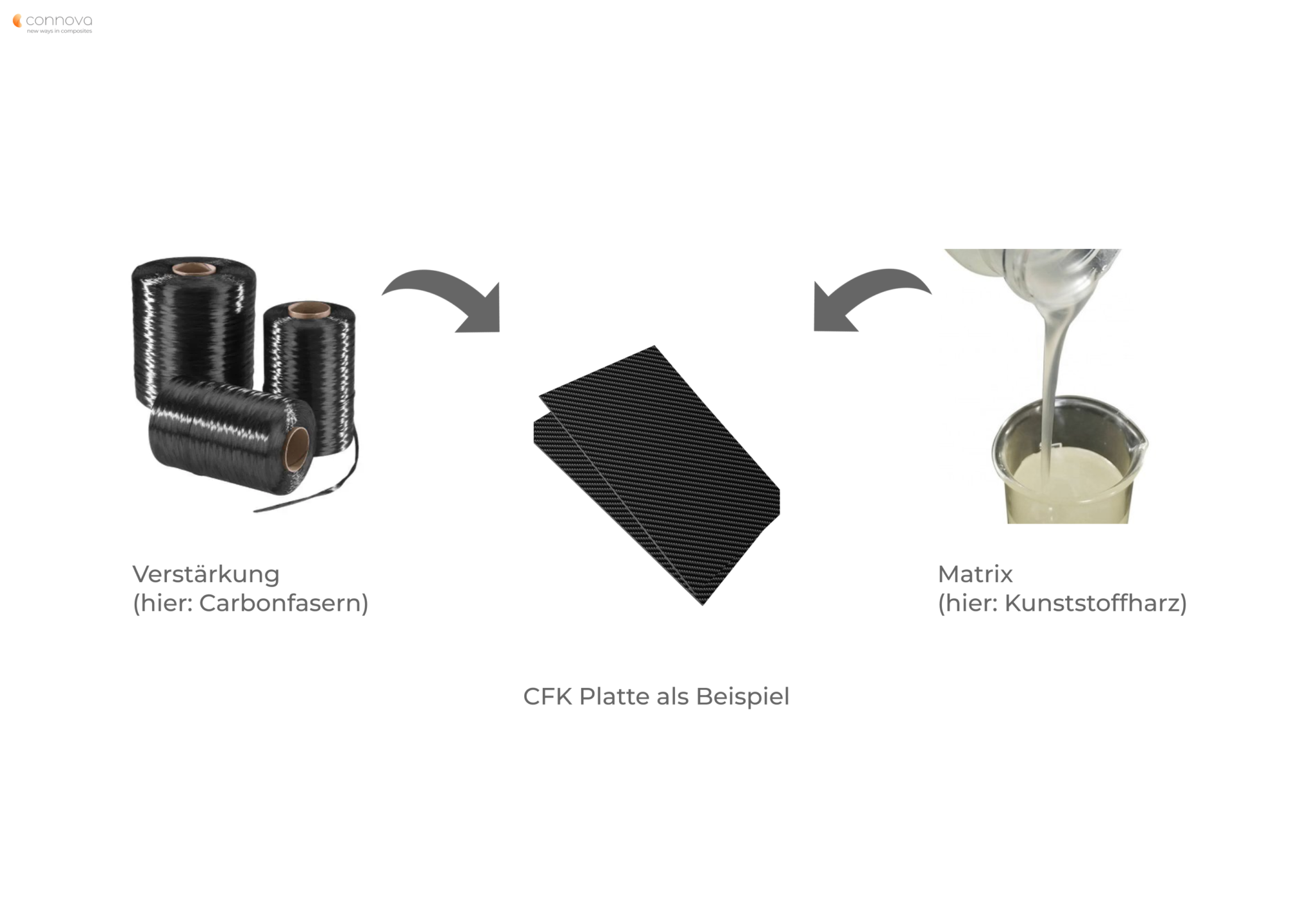
Composite or composite materials are created by combining two or more basic materials. The combination of materials leads to better mechanical properties than the base materials alone. Composites typically consist of a reinforcement (e.g. glass, carbon or aramid fibres) and a matrix (e.g. plastic resin) in which the fibres are embedded. Carbon fibre reinforced plastic (CFRP) is a specific type of composite material in which carbon fibres are used as reinforcement. This combination is considered an example of very high-performance composites.
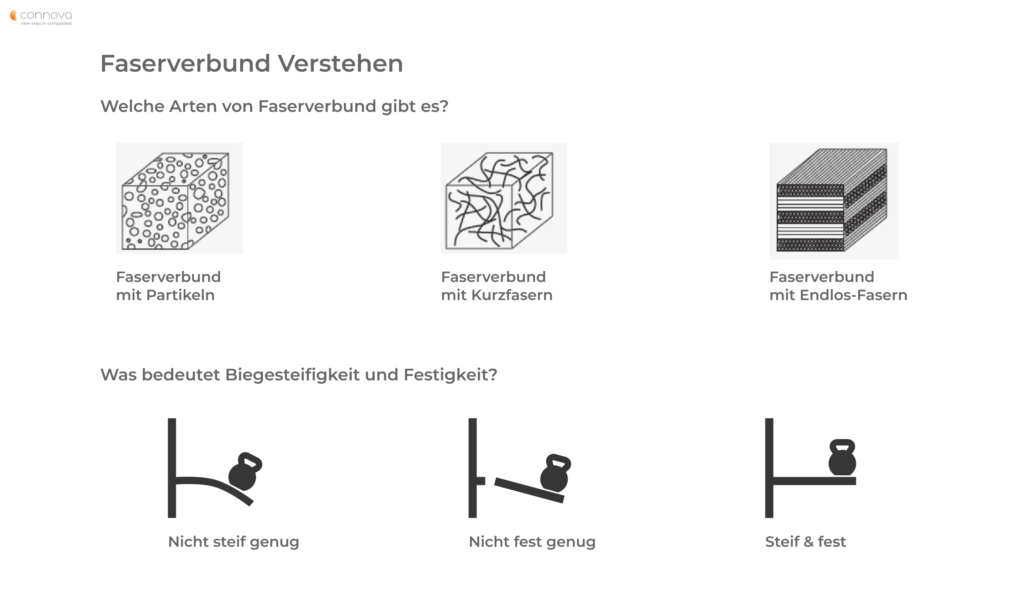
Composites are classified according to their composition, among other things. There are composites with particles, short fibres and continuous fibres. The choice of type influences the mechanical properties: on the one hand the stiffness (“degree of deformation under a certain load”) and on the other hand the strength (“limit value of the load at which a material fails”).
The bending stiffness of CFRP depends largely on the type of fibres. Composites with continuous fibres generally offer the best combination of stiffness and strength. In comparison, composites with particles or short fibres are less stiff and less strong, which makes them less suitable for highly stressed applications.
Common reinforcing fibres include carbon, glass, aramid and natural fibres. Carbon fibres are particularly known for their high mechanical properties in relation to their low density. These are divided into subcategories such as high-strength (HT), intermediate (IM), high-stiffness (HM) and ultra-stiff (UHM).
⦁ Carbon
⦁ Glass
⦁ Aramid
⦁ Natural fibres
⦁ High Tension HT (high-tension)
⦁ Intermediate IM (intermediate)
⦁ High Modulus HM (high-stiffness)
⦁ Ultrahigh Modulus UHM (ultra-stiffness)
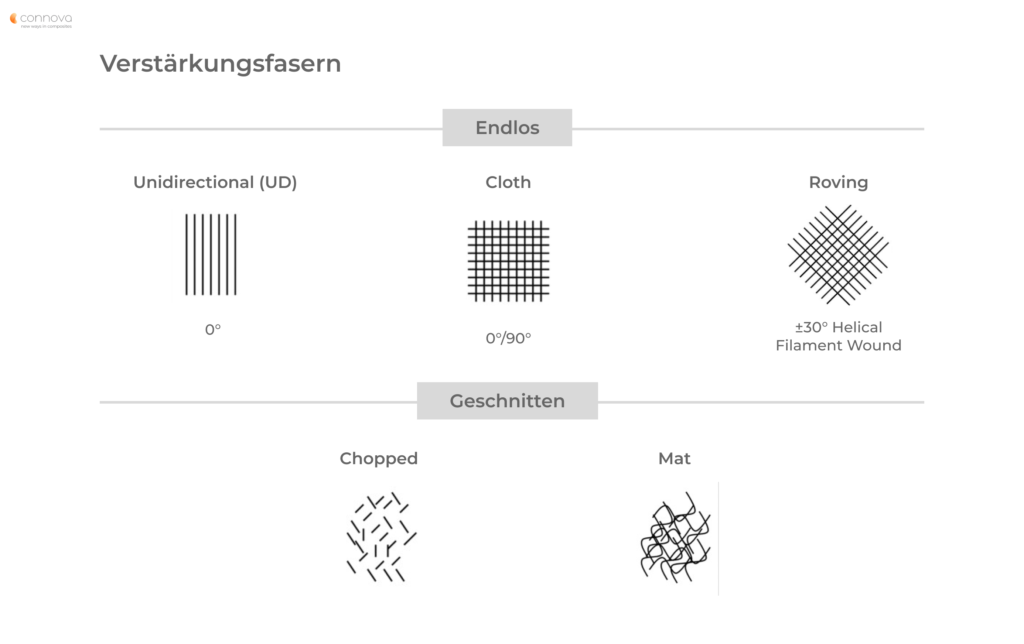
With reinforcing fibres, a basic distinction is made between “continuous fibres” and “short (chopped) fibres”.
Depending on the application and load condition of the component, continuous fibres in one layer can all be aligned in parallel (uni-directional or UD for short) or woven into a textile fabric. If several UD layers are arranged on top of each other in different orientations (angular alignment), they are also referred to as multi-axial fabrics.
In contrast, chopped fibres are used as short fibres (0.5 to 2mm) in injection moulding compounds as reinforcement or as “long fibres (10-50mm) in knitted mats or nonwovens.
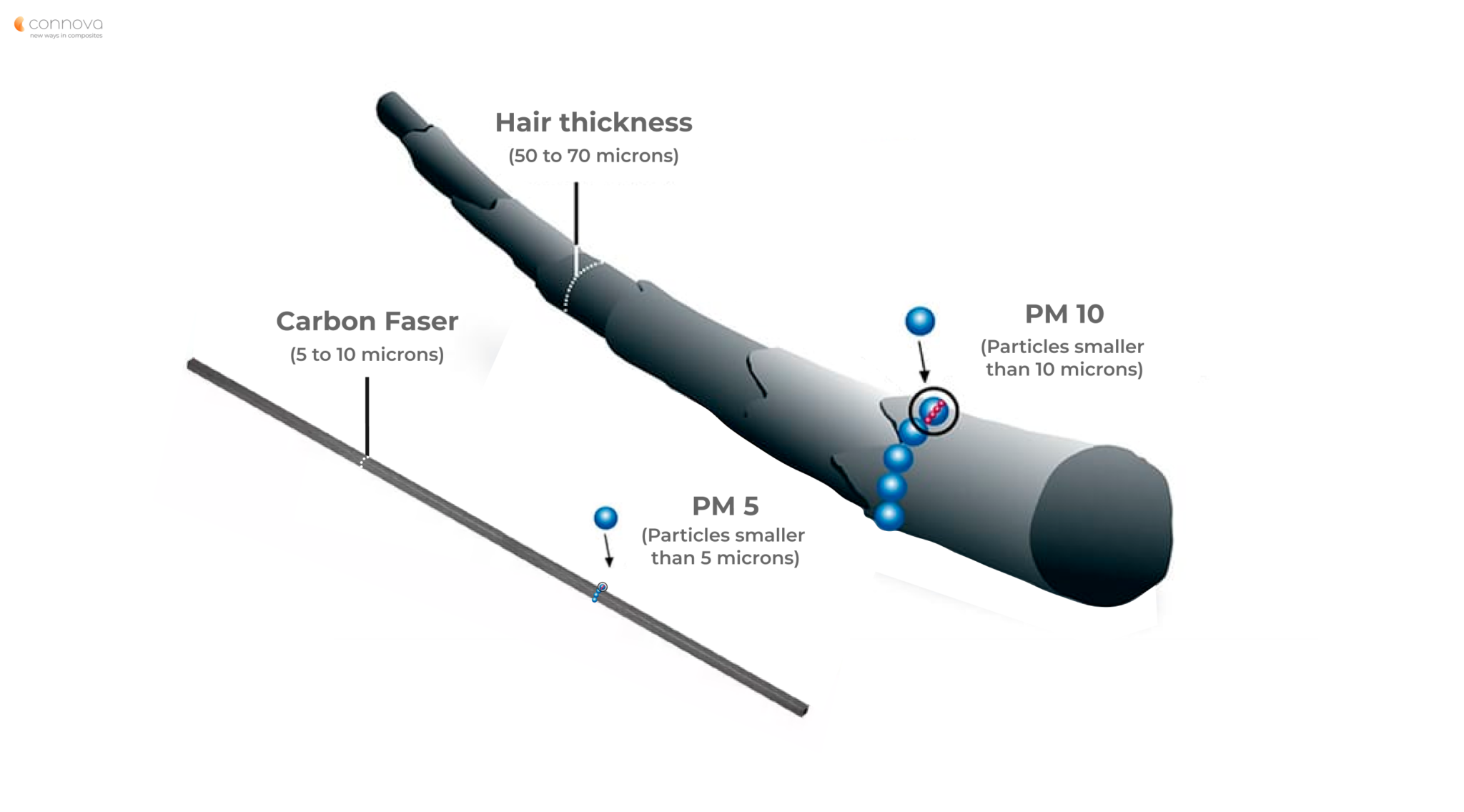
A single fibre – also known as a filament – has a diameter of around 10 micrometres, making it thinner than a human hair.
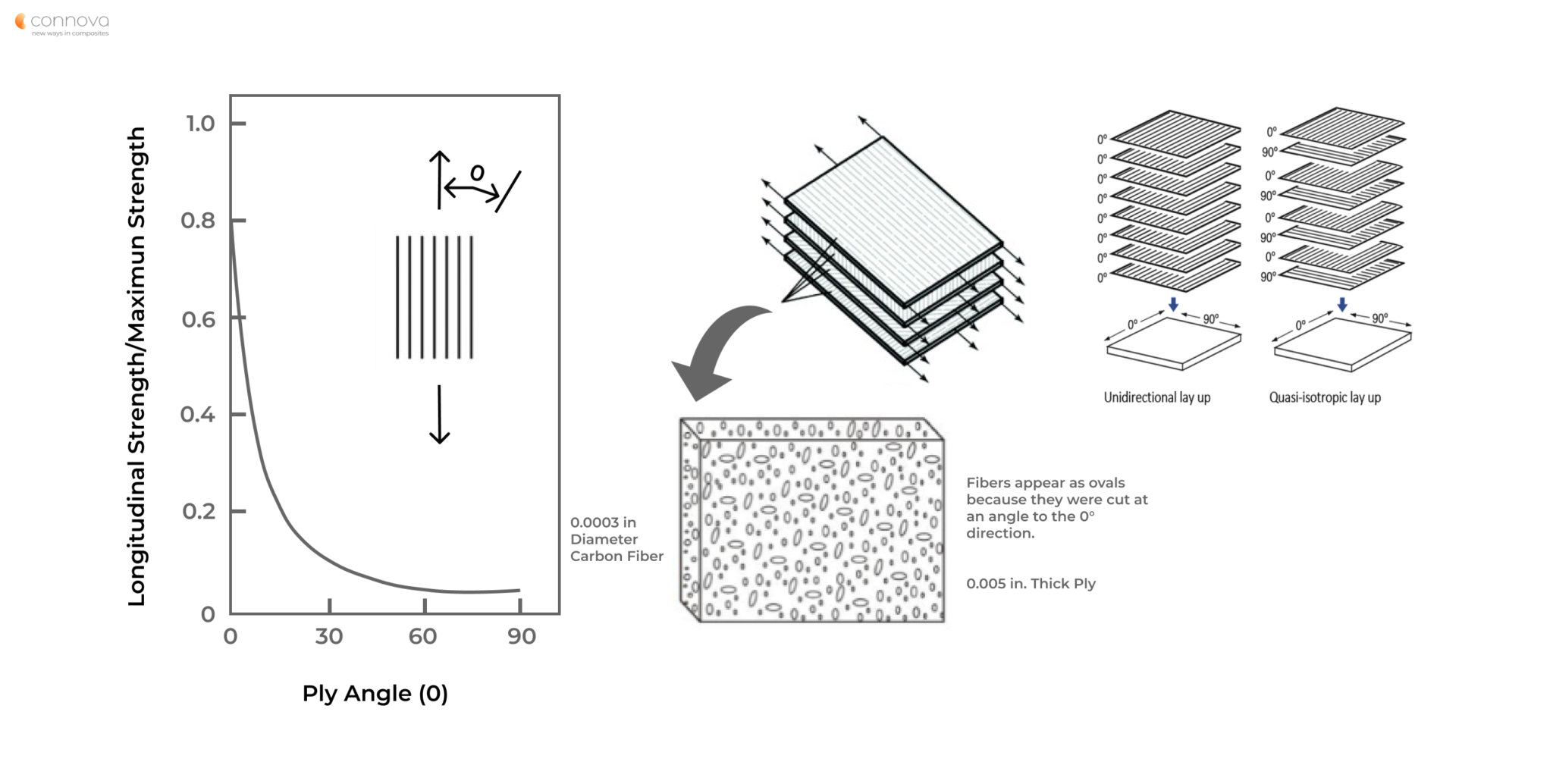
Highly stressed CFRP components are made from several layers of carbon fibres embedded in a plastic matrix. The layer structure can be customised to achieve specific mechanical properties. The fibre orientation in the individual layers plays a decisive role in the performance in a specific load direction.
The principle of laminates and the importance of fibre orientation is shown in the figure below:
The combination of different fibre angles results in different properties of laminates (layer structure of different plies)
The density of CFRP is typically around 1.55 to 1.65 g/cm³ and is therefore significantly lower than that of metals such as steel or aluminium. The stiffness of CFRP is in the range of 50 to 150 GPa, depending on the layer structure, fibre orientation and manufacturing process. The tensile strength in the fibre direction is in the range of 1500 to 2000 MPa, which makes CFRP one of the strongest materials available in relation to its low density.
Composites, especially CFRP, offer numerous advantages:
Composites are used in a wide range of industries, including aerospace, automotive, motorsport, medicine, energy and sport. CFRP in particular is used in areas where high strength and low weight are required.
⦁ Aviation – aircraft and drone manufacturers
⦁ Space travel – rockets, satellites, spacecraft, space telescopes
⦁ Motorsport – Formula 1 and other racing classes incl. Motorcycles
⦁ Automobil – GT-Fahrzeuge, Super-Sportwägen, Premium-Fahrzeuge
⦁ Medical – X-ray transparent products, clinical but lightweight products
⦁ Automation – robotic arms, fast-moving or rotating components
⦁ Oil & Gas – pipelines, containers, tanks
⦁ Energy – wind rotor blades, high-pressure tanks (including hydrogen tanks)
⦁ Marine & Yacht – sailing boats, racing yachts, luxury yachts
⦁ Sports & Leisure – bicycles, surfboards, tennis & golf rackets, fishing rods
Polymers in composites are generally flammable. Additives or special coatings are used to ensure fire protection. The UL 94 standards classify the flame resistance of these materials. Combinations of additives and coatings can be useful for extreme applications.
⦁ Chemical composition: Polymers consist of hydrocarbon chains. They ignite easily in a fire, generating a lot of heat, flames and smoke.
⦁ Different fibres: Synthetic fibres such as glass, carbon or ceramic are flame-retardant, while natural fibres are highly flammable.
Two fire protection strategies:
⦁ Additives in the polymer matrix, such as aluminium hydroxide, reduce flammability.
⦁ Fire protection coatings on the component surface, often intumescent, provide effective protection.
⦁ Availability: There are numerous fire protection additives and resins that have been tested and are suitable for various applications.
⦁ Costs: Fire protection coatings tend to be more expensive, but offer maximum protection in combination with additives.
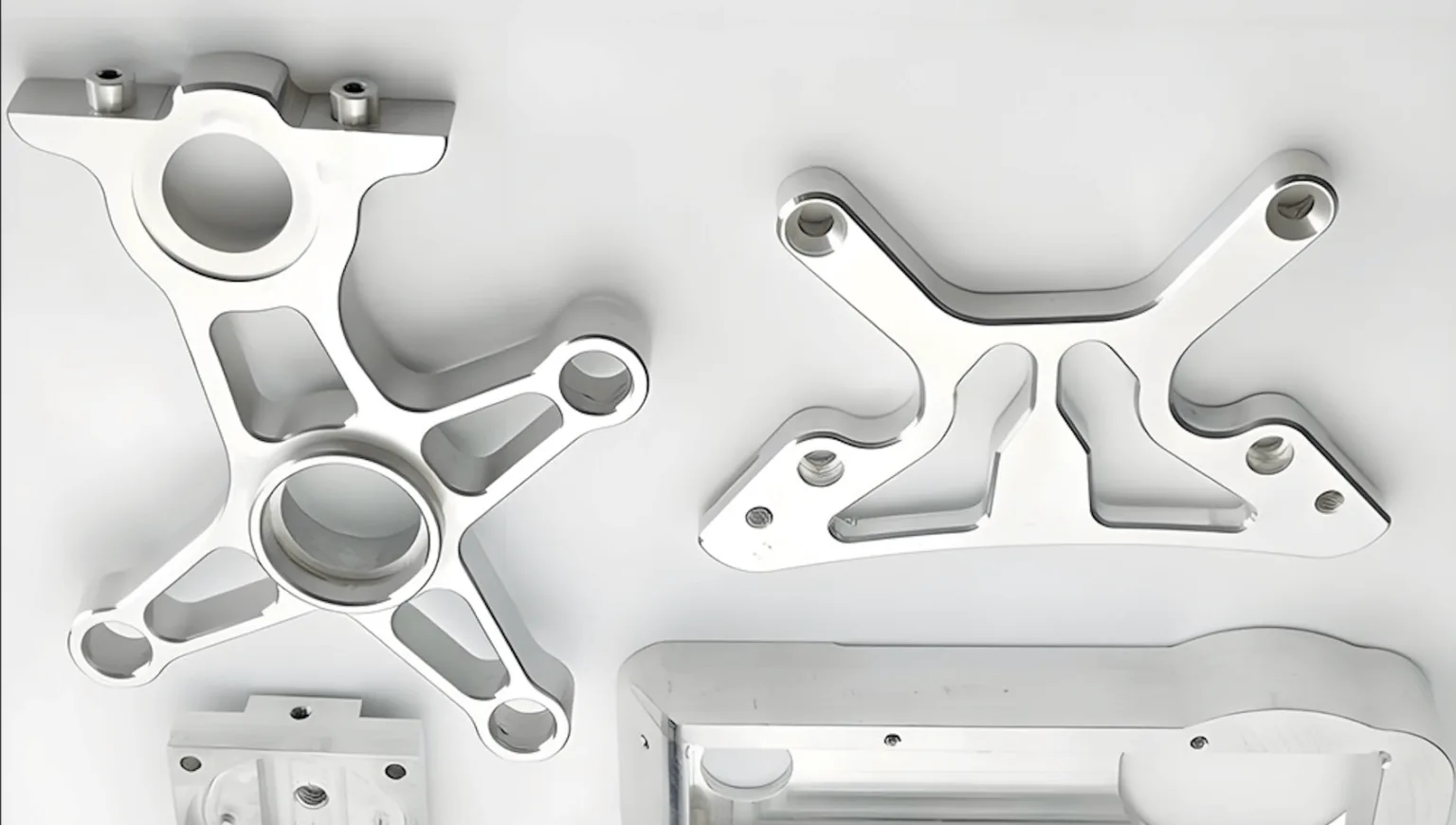
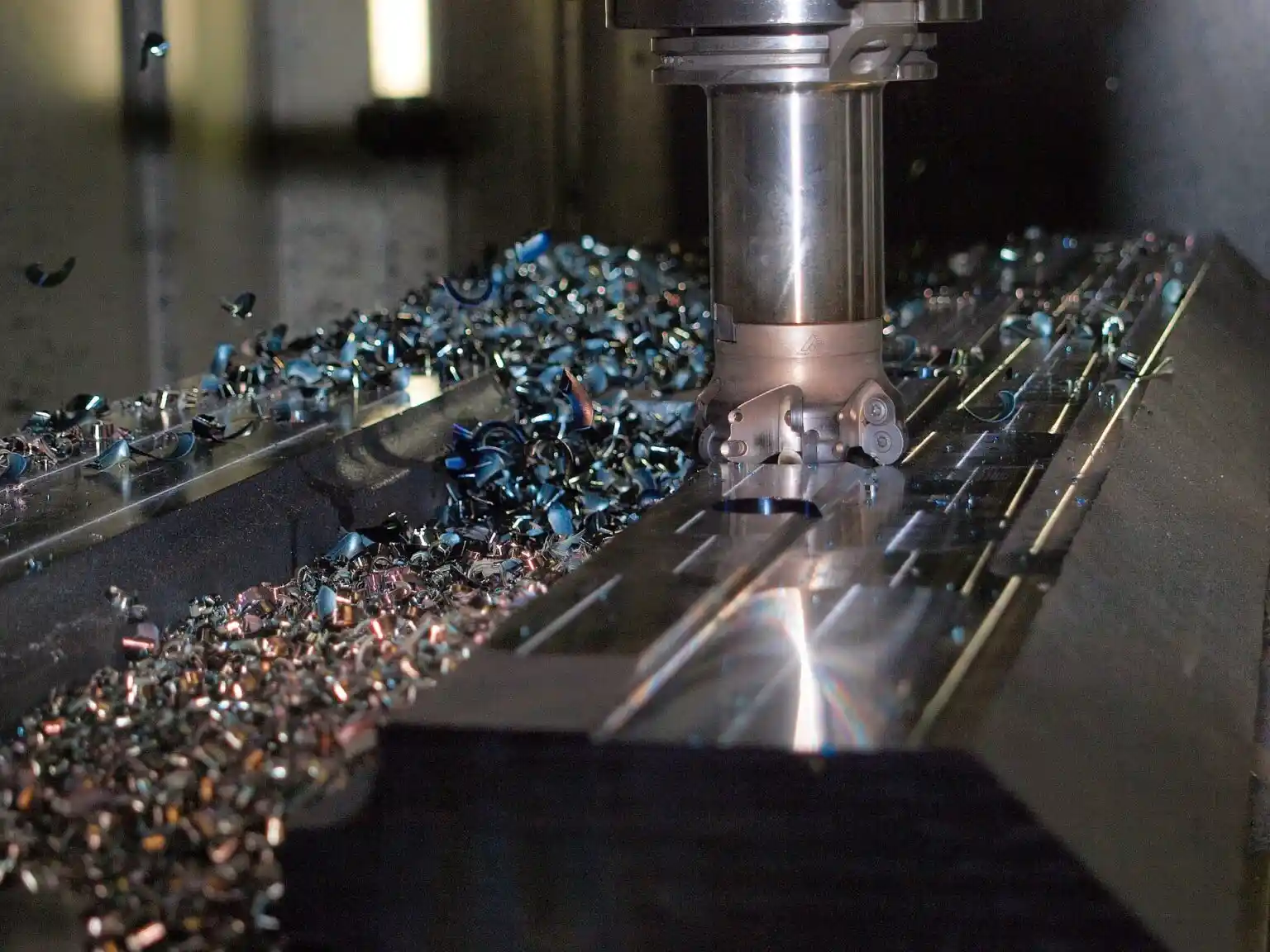
Our expertise in CFRP milling enables us to produce high-precision components that fulfil specific mechanical requirements while maintaining the structural integrity of the material.
As your full-service CNC partner, we not only offer milling services, but also comprehensive support in the development and production of your projects. Choose us for seamless and efficient realisation of your CFRP and composite projects, all from a single source.
We integrate CNC milling services for composites, specialising in CFRP, in a comprehensive manufacturing environment. This enables the precise and efficient machining of hybrid parts and pure composite components.
Our vertical production chain covers all steps – from material selection and design through to milling and finishing. This guarantees an efficient production line with optimised quality and speed, enabling us to meet complex requirements quickly and precisely.
Connova is your competent partner for innovative solutions in the field of composites and CFRP. With over 35 years of experience and in-depth expertise, we offer customised lightweight construction solutions for the most demanding applications. From development and prototype production to series production, we support our customers with state-of-the-art technologies and the highest quality standards.
We cover a wide range of services, including engineering, CNC machining, post-processing and surface finishing. Our focus is on sectors such as aviation, aerospace, motorsport, automotive, industry and medical technology. Whether high-precision structural components, aerodynamic components or ultra-stable solutions for aerospace – we have the expertise to turn your visions into reality.
Benefit from our ISO-certified production, state-of-the-art manufacturing techniques and a holistic approach that guarantees the highest quality and on-time delivery. Let us realise your projects together – contact us for a non-binding consultation!
With comprehensive expertise from decades of experience in lightweight construction for the aviation industry, we are perfectly positioned to realise your concepts. We invite you to a professional consultation in which we will explore how we could act as your future partner. This consultation is of course non-binding and free of charge.