KNOW-HOW

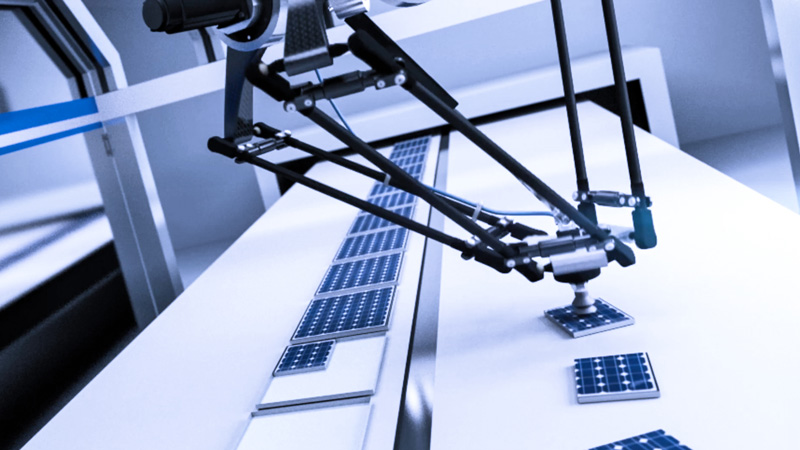
Experience in mechanical engineering, automation, and robotics.

COMPOSITES

Increased performance with lower energy consumption and low maintenance costs

INDIVIDUALITY

Personal support from the feasibility analysis to series production

Industry and Automation

CFRP components reduce energy consumption and increase the performance of end products due to their lower weight. This is particularly crucial when it comes to maximum precision and especially fast movements. Fatigue strength and corrosion resistance ensure longevity and low maintenance costs. Upon request, we can support you as early as the concept phase and offer your engineers and developers competent advice. Together with you and your team, we can also meet the highest requirements within short deadlines – individually, efficiently, and economically.

When Composites Pay Off in Mechanical Engineering

Not every mechanical component benefits from fiber-reinforced composites. The deciding factors are not the material itself, but the moving mass, the required stiffness and the production volume.

The benefits become apparent wherever mass has to be accelerated and decelerated. Every reduction in the mass of a moving component has a double effect: the drive requires less energy, and the machine settles more quickly after positioning. Together, these effects increase the achievable cycle rate without requiring changes to the drive or control system. For rotating components, the critical speed also increases because stiffness and mass are in a more favorable ratio.

A CFRP component is therefore not simply a replacement part made from a different material, but a different design altogether. The fibers are aligned along the load paths, stiffness is tailored to the required directions, and loads are introduced through embedded metal inserts. Replicating an existing steel component one-to-one means giving up most of the potential benefits.

Comparison of Materials for Moving Machine Components

Criterion

CFRP

Aluminum

Steel

Density

approx. 1.5–1.6 g/cm³

approx. 2.7 g/cm³

approx. 7.85 g/cm³

Stiffness per Unit Mass

very high, can be designed to be directional

medium

medium

Thermal expansion

Adjustable from near zero to values typical for the material

high

medium

Vibration damping

high – shorter settling time after positioning

low

low

Behavior Under Alternating Loads

very good

limited

good

Corrosion

None; be aware of contact corrosion at metal connections

Protective coating required

Protective coating required

Joining Technology

Adhesive bonding, embedded inserts

Welding, Riveting, Bonding

Welding, Screwing

Continuous service temperature

up to around 200 °C, depending on the resin system

high

very high

The values shown are indicative values for the material groups. Project-specific properties depend on the fiber type, laminate structure and resin system and are verified during the design process.

Three Questions to Clarify Before Every Project

How Fast Is the Mass Being Moved?

The greater the mass and the number of cycles, the faster the component pays for itself. On a machine operating in three shifts, every second saved in cycle time adds up over years of operation.

Which Property Is Currently the Limiting Factor?

Weight, deflection, natural frequency, thermal expansion, corrosion or X-ray transparency. As soon as one of these factors limits the design, composites become a serious option.

How Many Components per Year?

From around 50 units per year, series production becomes economically viable. Several variants produced in smaller quantities can also be combined if they use the same tooling concept.

Six Reasons Why Engineers Switch to Fiber-Reinforced Composites

In practice, the starting point is almost never the material itself, but a physical limitation reached by a metal structure. These six drivers cover the majority of our industrial projects.

Trigger 01

Moving Mass and Cycle Rate

Booms, swing arms and gripper supports that are accelerated and decelerated many times per minute. Less mass means lower drive energy, shorter settling times and higher throughput with the same drive system.

Trigger 02

Stiffness Over Long Spans

Beams, crossbars and gantry axes where deflection increases disproportionately with length. A fiber-reinforced composite beam maintains precision where aluminum already begins to yield.

Trigger 03

Rotation and Critical Speed

Shafts, sleeves and rotor retaining bands. Centrifugal force increases with the square of the rotational speed. A filament-wound CFRP component securely retains the magnets or rotor and increases the maximum speed limit.

Trigger 04

Dimensional Stability Under Temperature Fluctuations

Measuring equipment, optical assemblies and test frames. The coefficient of thermal expansion of CFRP can be tailored to near zero. Measurement results remain stable throughout the day.

Trigger 05

Transparency and Electrical Neutrality

X-ray-transparent components, high-voltage insulation and applications without disruptive eddy currents. The choice of fiber can be used to control what is transmitted and what is shielded.

Trigger 06

Corrosion, Chemical Media and Cleanroom Environments

Components exposed to aggressive media or used in cleanroom environments. Fiber-reinforced composites do not corrode, are resistant to many chemicals and can replace stainless steel in many applications.

Identify the Driver

Define the Load Case

Check Feasibility

Design

Prototype and Validate

Series Production

Components and Assemblies for Mechanical Engineering and Automation

We regularly manufacture the following types of components. Each entry represents completed projects, not a theoretical statement of capability.

Component

Typical Application

Why Fiber-Reinforced Composites

Procedure

Booms and Swing Arms

Pick-and-place systems, palletizing robots, handling axes

Low moving mass with high stiffness, higher cycle rates without changing the drive system

RTM, prepreg autoclave

Rockers and Swing Arms

Placement machines, high-frequency feed movements

Low mass, very high cycle counts, tight positioning tolerances

Prepreg autoclave, adhesive bonding

Beams and Crossbars

Stamping machines, cutting systems, gantry axes, inspection systems

High stiffness over long spans with low deflection

Prepreg autoclave, filament winding

Robot Arms

Automation systems, packaging technology

High specific stiffness, combination of CFRP tubes and metal interfaces

Filament winding, prepreg autoclave, adhesive bonding

End Effectors and Gripper Supports

Glass handling, sheet metal handling, assembly automation

High stiffness at the end of the axis, integration of vacuum and electronics into the component

Prepreg autoclave, integral construction

Electronics manufacturing, fixture construction, support plates

Flatness, dimensional stability, low thermal expansion

Prepreg autoclave, hot pressing

Canned-motor and magnetic-drive pumps, compressors

No eddy-current losses, resulting in higher system efficiency; resistant to process media

RTM, prepreg autoclave

High-speed electric motors, spindles, rotors

Secure retention of magnets at high circumferential speeds, electrically neutral

Winding Technology

Tubes and Profiles

Structural axes, measurement setups, support elements

High stiffness with minimal weight, defined wall thickness

Filament winding, prepreg

Load Frames and Test Structures

Tensile and compression testing machines, test rigs

Minimal thermal expansion with high stiffness — reproducible measurement results

Prepreg Autoclave

Radiolucent Components and Measurement Tubes

X-ray and inspection systems, research setups

X-ray transparency, gas tightness, low leakage rate

Vacuum infusion (VARI), adhesive bonding

Enclosures and Covers

Inspection systems, special-purpose machines, movable covers

Lightweight, stiff shells; easy to move by hand even at large sizes

Prepreg autoclave, vacuum infusion

Can’t find your component on the list? Most inquiries come to us as drawings of existing metal components with the question of whether they can be made lighter. That is exactly what our feasibility analysis is for.

Our success stories

Industries Where Our Components Perform

In industrial applications, fiber-reinforced composites are not an industry-specific solution, but a response to a specific physical requirement. This requirement occurs across a wide range of industries.

Packaging and Filling Technology

Booms, format parts and transport elements in machines operating at several hundred cycles per minute. Every gram on the moving axis directly affects throughput and energy consumption.

Semiconductor and Electronics Assembly

Placement heads, rockers and support plates that must withstand extreme accelerations while maintaining micrometer-range tolerances. Damping and dimensional stability are crucial to production yield.

Robotics and Handling

Swing arms, end effectors and gripper supports. Mass has the greatest impact on dynamics at the end of the axis — this is where fiber-reinforced composites offer the greatest advantage.

Pumps, Drives and Vacuum Technology

Containment shells without eddy-current losses, as well as retaining bands and sleeves for high rotational speeds. We manufacture both as series products using RTM or prepreg processes.

Printing, Embossing and Converting

Beams, rollers and moving tool carriers in machines with high web speeds. Low deflection across the full working width is the key criterion.

Measurement, Testing and Optical Technology

Load frames, instrument housings and optical supports. A coefficient of thermal expansion close to zero maintains measurement accuracy despite changing ambient temperatures.

Equipment and Plant Engineering

Media-resistant components, internal fittings and vessel parts. Where stainless steel reaches its limits due to corrosion or weight, fiber-reinforced composites are often the more economical solution over the service life.

Rail and Transportation Technology

Panels, support elements and custom components for low-volume vehicle production. We clarify fire protection requirements according to EN 45545 with you in advance on a project-specific basis.

Laboratory and Analytical Automation

Pipetting and handling axes with high cycle rates. Lightweight axes enable higher throughput without compromising positioning accuracy.

Our Core Competencies in Industry Automation

Engineering Development

Tailored to Your Requirements

From the initial idea to a series-ready component: we advise you, design and calculate machine components made from fiber-reinforced composites, and optimize existing automation systems precisely for your application.

Composite

Fiber-Reinforced Composite Components for Industry

We manufacture high-performance CFRP components using the process best suited to each application, whether prepreg autoclave, RTM or filament winding. Strict quality controls and on-time delivery ensure that the components integrate reliably into your production.

CNC Machining

Precision for Demanding Components

Our CNC services include model making, toolmaking and final machining of fiber-reinforced composite components for industry. Where required by the application, we machine to tolerances ranging from hundredths to thousandths of a millimeter.

Machining Support

From Production to Finishing

We handle the mechanical machining of your fiber-reinforced composite components and support you throughout the entire production process — from individual machining steps to expertise and practical assistance for your in-house production.

Machining of Composite Materials

Fiber-reinforced composites cannot be machined like metal. Milling CFRP with conventional metal-cutting tools and parameters causes delamination, fiber pull-out and unusable edges.

Carbon fibers are hard and highly abrasive. They wear conventional cutting edges very quickly, while the resin matrix softens if the temperature becomes too high. We therefore use diamond-coated and diamond-tipped tools, adapted cutting speeds and an extraction system that captures fiber dust directly at the cutting edge.

Workholding is equally important. A thin-walled composite component deforms under clamping force if it is not supported across its surface. We therefore build the fixture in-house and design it together with the component, rather than afterward.

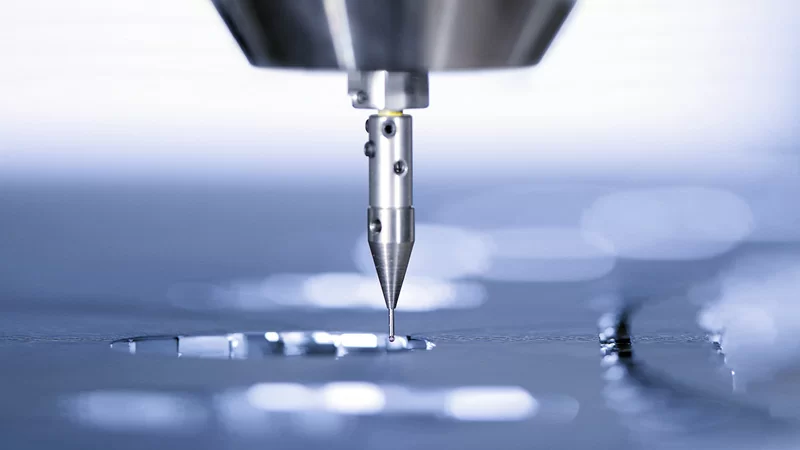
Precision must be measurable. We inspect critical dimensions directly on the machine using a touch probe, without unclamping the component. This preserves the reference, allows deviations to be corrected immediately and reliably maintains tolerances in the hundredth- and thousandth-of-a-millimeter range. On request, we document the measurement results in an inspection report.

Model and Toolmaking

Fixtures

5-Axis Milling

Deburring

Measurement

Documentation

What We Handle in Machining

Machining Our Own Components

Trimming, drilling, pockets and fits on components from our own production. We also machine finished assemblies and components, where required with tolerances down to the micrometer range. Machining and inspection are performed in the same fixture so that the reference remains unchanged from the first cut through to measurement.

Contract Machining for Your Components

We also machine composite components that were not manufactured by us, as well as models, tools and fixtures made of metal and plastic.

Model, Tool and Fixture Making

Master models, molds and clamping fixtures are produced in-house. This significantly shortens the feedback loops between the first component and final approval.

Overview of Manufacturing Processes

We are not tied to a single manufacturing process. Geometry, surface requirements and production volume determine which process is used — not the equipment available.

Procedure

What It Delivers

Typical Components

Production Volume Range

Highest fiber volume fraction, very low porosity, precisely defined layup

Highly Loaded Structural Components

One-Offs to Medium-Volume Production

Out-of-Autoclave Prepreg (Oven)

Highest fiber volume fraction, very low porosity, precisely defined layup

Booms, Rockers, Beams, Load Frames, Housings

One-Offs to Medium-Volume Production

Rotationally Symmetrical Components with Precisely Reproducible Wall Thickness and Fiber Orientation

Retaining Bands, Sleeves, Tubes, Shafts

Series Production, Including Larger Volumes

Closed mold, two high-quality surfaces, well suited for automation

Foam-Core Booms, Structural Components in Series Production

Medium- to High-Volume Production

Large Components Without an Autoclave, Good Component Quality with Moderate Tooling Effort

Enclosures, Covers, Measurement Tubes, Shells

One-Offs to Small-Series Production

Prepreg Process with Short Cycle Times, Two Defined Surfaces and High Reproducibility

Plates, Flat Components, Covers

Medium- to High-Volume Production

We often combine different processes within a single assembly — for example, a filament-wound tube with bonded metal joints, as used in the robot arms for Bosch Packaging.

25 %

Higher System Efficiency with CFRP Containment Shells Without Eddy-Current Losses

Series-Produced CFRP Containment Shells

0.015 mm

Bonding Accuracy of the CFRP Rocker Arm for the Besi Group

Success Story ESEC / Besi Group

1450 mm

Cantilever Length of the Carbon Fiber Swing Arms Made from High-Modulus Prepreg

Success Story KUKA

2 Locations

Production in Villmergen (CH) and Klipphausen (DE)

Connova Group

From Prototype to Series Production

The Most Common Question from Engineers Is: At What Point Does It Become Economically Viable?

From Around 50 Components per Year

Below this volume, tooling and setup costs dominate the unit price. From around 50 components per year, these costs are distributed sufficiently for series production to become economically viable — with no fixed upper volume limit.

Important: They do not have to be 50 identical parts. Ten variants with five units each also count together, provided they use the same tooling and process concept. This is a typical scenario in special-purpose machine engineering.

When Composites Are Not the Right Solution

At continuous operating temperatures above around 200 °C, resin systems reach their limits. For components driven purely by cost and without specific technical requirements, conventional materials are almost always the better choice.

From Inquiry to Series Production — The Process in Eight Steps

Whether it is a one-off component or a series-produced part, the process is the same; only the scope of qualification differs.

Inquiry and Feasibility

We assess the load case, available installation space, production volume and target date, and tell you whether a fiber-reinforced composite is the right solution — even if the answer is no.

Design and Calculation

Laminate structure, fiber orientation and load introduction are designed and verified by calculation. Your engineers are involved throughout the process.

Process and Tooling Concept

The manufacturing process, mold partitioning and demolding concept are defined together with the production team.

Toolmaking

Models, tools and fixtures are produced in-house. Adjustments after the first component can be implemented directly and incorporated into the process.

Prototype and Testing

The first component is measured and tested. Any deviations are fed back into the tooling and process before series production begins.

First Article Inspection

Documented approval with measurement and material verification, and upon request according to your own inspection plan.

Series Production Ramp-Up

Process parameters are finalized and documented. From this point onward, the component can be reproduced consistently.

Series Production, Reorders and Service

Repeat and replacement parts are produced using the same tooling. We also handle repairs and rework on existing components.

Your Contact Person

Jens Kählert

Head of Sales Projects, Connova Deutschland GmbH

Jens Kählert combines mechanical engineering and industrial composites experience in one person. A Diplom-Ingenieur in Mechanical Engineering (born 1970), he started his career at composites pioneer Huber+Suhner and has personally accompanied the rise of high-performance composites into industrial applications for the past 35 years. Today he is Head of Sales Projects at Connova Deutschland GmbH and the central point of contact for composite solutions in industrial automation. His advantage for industrial customers: with more than 20 years of operational practice, he knows the entire supplier landscape and can assess from documented experience which composite solution actually delivers economically in which industrial environment.

Why You’ll Benefit from His Expertise:

  • Mechanical engineer for industry: Mechanical engineering degree plus 35 years of composites – speaks the language of design engineers, production managers and procurement officers at industrial plant builders equally.
  • Economics before material hype: Knows the point at which a composite component is genuinely economically superior – and communicates openly when classic materials make more sense for an industrial application.
  • First-hand industry overview: More than two decades of operational practice – knows virtually all relevant competitors, material systems and processes for industrial composite applications across the DACH region.
  • Speed through experience: Industrial projects need pace – his experience significantly shortens the evaluation phase and leads more directly to a viable solution.

“Industrial customers do not buy materials – they buy function over lifetime. My job is to define the composite solution that delivers exactly that: economically, with process reliability and reproducibly.”

— Jens Kählert, Head of Sales Projects, Connova Deutschland GmbH

EN 9100 and ISO 9001 — What This Means for Industrial Customers

Our quality management system originates from the aerospace industry. Industrial customers benefit from these standards without requiring the certification themselves.

Traceability

Every fiber and resin batch is assigned to a specific component. In the event of a complaint, the affected material and process can be traced.

Frozen Processes

Once series production has been approved, parameters are no longer changed without the change being documented and approved. This ensures consistent components over many years.

Documented First Articles

Measurement and material verification documents are provided for approval. Upon request, these can follow your inspection plan or document format.

Change Management

Design and process changes follow a defined approval procedure. Your purchasing and quality assurance teams always know which revision is being delivered.

Supplier Audits

We are accustomed to audits from the aerospace industry and also make our processes transparent to industrial customers.

In-House Measurement and Inspection

Geometry and component inspections are carried out in-house rather than by a third party. This shortens the feedback loop between manufacturing and approval.

Excellence in Industry Automation

With composite materials, accelerated masses are significantly reduced. In addition, there are further advantages such as higher stiffnesses or more favorable natural frequencies, better resilience, higher vibration damping, and improved thermal stability. Composites often also simplify technical complexity. The Connova Group offers you feasibility analyses, product developments, and the manufacture of series components. We are happy to support you in the evaluation of your project and accompany you in the successful implementation.

From CFRP Split Tubes to Tubes, Sleeves, and Plates

Screenshot 2024 07 05 at 17.34.05 removebg preview

From Prototype to Full Series Production

CFRP Split Tubes

Increase your system efficiency by 25% – No eddy currents, optimized fitting accuracy, and scalable series production for maximum performance.

Screenshot 2024 07 17 at 07.50.40 removebg preview 1

From Prototype to Full Series Production

CFRP Bandages and Sleeves

Carbon sleeves and bandages optimized for higher speeds – Increase performance and efficiency with our scalable manufacturing.

Screenshot 2024 07 19 at 13.53.14 removebg preview

From Prototype to Full Series Production

CFRP Panels

Maximize the structural integrity and efficiency of your applications with our CFRP plates.

Why Connova Is Chosen for Industrial and Automation Projects

Six statements about our position in industrial lightweight engineering — each supported by verifiable information on this page.

Completed Series-Production Projects for Mechanical Engineering, Automation and Robotics — Not Just Prototypes

Evidence: Success stories from ABB, Besi, KUKA, Bosch Packaging and GlasTrösch

Three In-House Series Products in Ongoing Production: Containment Shells, Retaining Bands and Sleeves, and Plates

Evidence: Series Products section and the linked product pages

In-House Manufacturing Expertise from Toolmaking and Composites to Machining and Inspection

Evidence: Machining of Composite Materials and Core Competencies sections

All Five Manufacturing Processes In-House — The Design Is Determined by the Component, Not the Equipment

Evidence: Overview of Manufacturing Processes section

Certified to EN 9100 and ISO 9001, with Aerospace Quality Standards

Evidence: EN 9100 and ISO 9001 section

Two Production Sites in Switzerland and Germany

Evidence: Villmergen (CH) and Klipphausen (DE), see footer

Medical technology

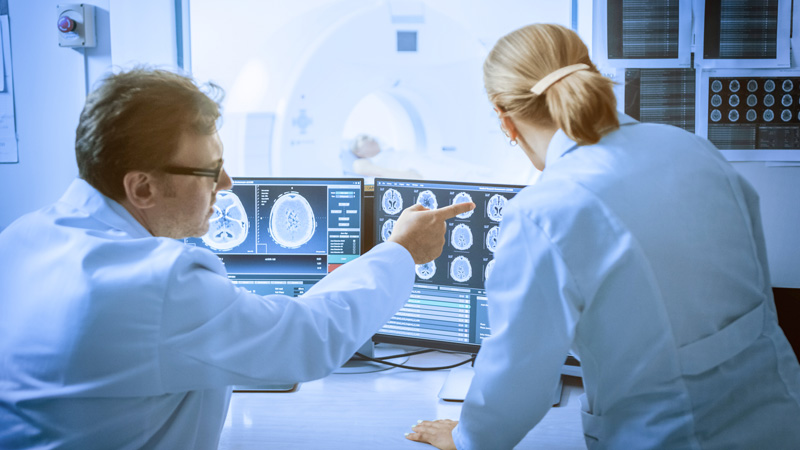
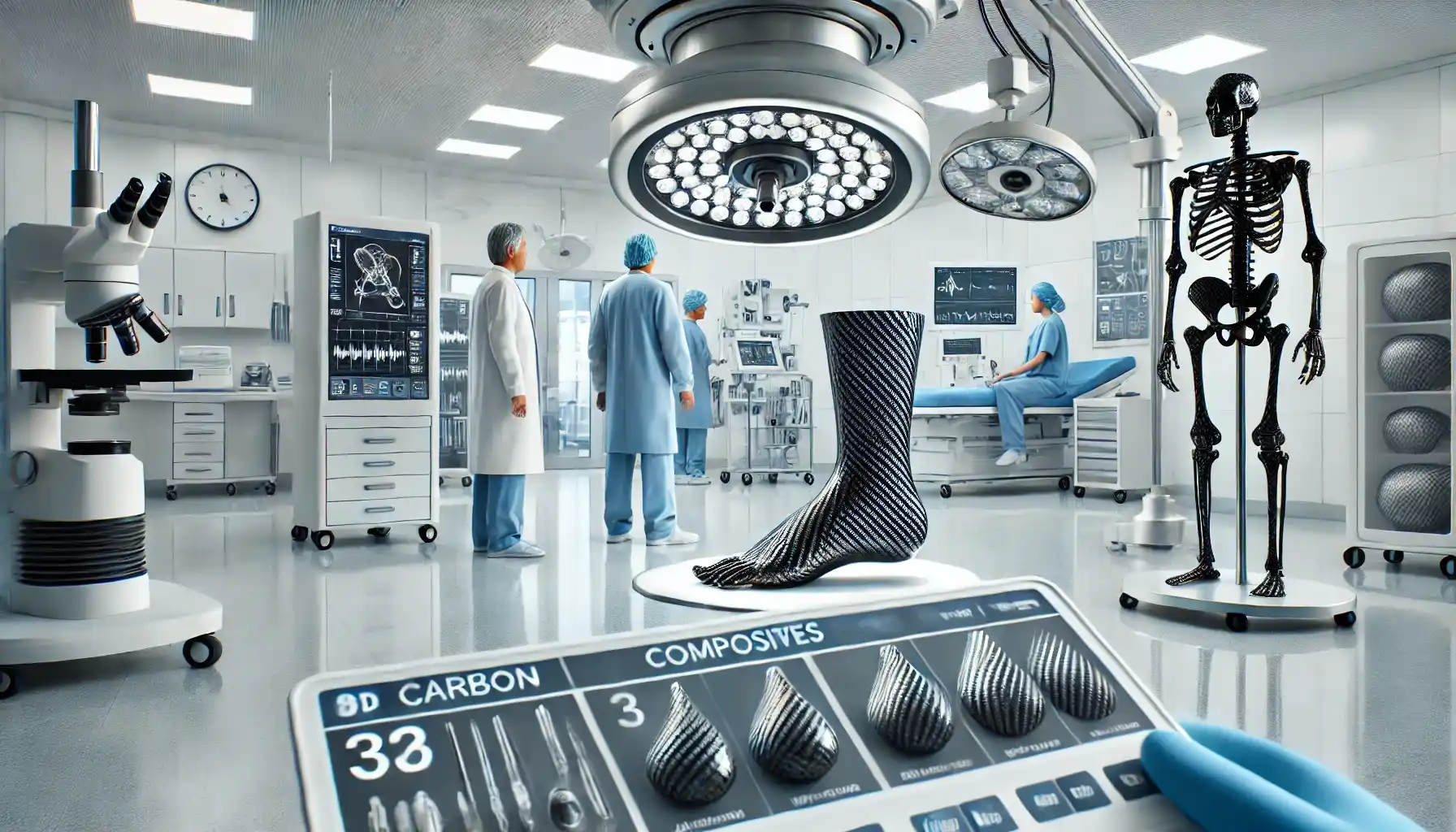
High strength, low weight, good corrosion resistance, and especially X-ray transparency make carbon composites particularly interesting for modern medicine. In our long history in the field of composites, we have acquired specific know-how in medical technology. This enables us to meet the highest requirements within short deadlines – individually and certified.

KNOW-HOW

Specific Experience in Versatile Areas of Medical Technology

COMPOSITES

Strength, Lightness, Corrosion Resistance, and X-ray Transparency

INDIVIDUALITY

Personal support from the feasibility analysis to series production

Our success stories

03 01 02 Pilatus sRGB 800x450px 1

Schärer Medical

X-ray Transparent Patient Tables

Thanks to the use of CFRP, it is possible not to change the patient positioning in spinal surgery during the operation process, including X-ray. The Connova Group provides the following services for Schärer Medical:

  • Conducting a feasibility study based on customer specifications
  • Analytical calculations of stiffness and strength
  • Testing the calculations on the prototype
  • Production of CFRP parts for the patient table in series tools, including structural bonding
03 01 03 Copter sRGB 800x450px

Paul Scherrer Institute

Patient Table

The patient table developed for the PSI is characterized by high positioning accuracy, which is achieved thanks to the stiffness and CNC machining precision. In addition, the table offers maximum X-ray transparency for proton beam therapy. Thanks to high-quality processing and lightweight CFRP sandwich construction, there are no disturbing artifacts, which leads to a significant improvement in therapy.

03 01 04 Solarimpulse sRGB 800x450px

REGA

Stretcher for Rescue Helicopter

The Connova Group develops lightweight and X-ray transparent shell parts for REGA, which are characterized by high stiffness and strength. The corresponding stretcher is easy to clean. Further details:

  • Shell Component Made of CFRP/AFK Prepreg
  • Exact CNC Post-Processing

Excellence in Medical Technology

Carbon composites not only expand the purely technical application possibilities; they also simplify handling in daily use. We accompany product engineers and other decision-makers from the first feasibility analysis to series production. We also support in the evaluation of the project and help to weigh prejudices and risks so that the overall product can be successfully implemented.

Composites in Mechanical Engineering — Frequently Asked Questions

The questions engineers and purchasing teams most frequently ask us during an initial consultation.

At What Production Volume Does a CFRP Component Become Economically Viable in Mechanical Engineering?
From around 50 components per year, series production becomes economically viable because tooling and setup costs can be distributed effectively. They do not have to be 50 identical parts: several variants in smaller quantities can also be combined if they use the same tooling and process concept. There is no fixed upper volume limit. We also manufacture one-off parts and prototypes, although in those cases the one-time costs dominate the unit price.
Significantly more expensive in terms of the component price alone. However, the calculation can still work if the component solves a problem that metal cannot — such as achieving a higher cycle rate, lower drive energy, longer maintenance intervals or measurement accuracy that would otherwise be unattainable. The decisive factor is the total cost over the machine’s service life, not the purchase price of the individual part. Where this benefit is absent, we advise against using composites.
Depending on the resin system, the continuous service temperature is generally limited to around 200 °C. Solutions are available for short-term temperature peaks and special applications with heat protection, but for components permanently exposed to several hundred degrees, fiber-reinforced composites are not the right material.
Technically yes, but in most cases it does not make sense. A fiber-reinforced composite component follows different design principles: fibers are aligned along the load paths, wall thicknesses and transitions are designed differently, and loads are introduced through embedded inserts. Simply reproducing the existing metal geometry means giving up most of the potential weight and stiffness benefits. We therefore start with the function, not the drawing.
Through embedded metal inserts, bearing seats and bonded metal joints. In composite design, the interface is a dedicated engineering task — it is determined by the load capacity of the entire assembly. In the robot arms for Bosch Packaging, for example, filament-wound CFRP tubes carry the structure while coated aluminum milled parts introduce the loads. For the rocker arm developed for the Besi Group, the required bonding accuracy was below 0.015 mm.
Yes. We also machine components that were not manufactured by us and provide contract manufacturing for models, tools and fixtures. Machining fiber-reinforced composites requires diamond-coated tools, adapted cutting parameters and extraction directly at the cutting edge — otherwise delamination and fiber pull-out can occur.
Prepreg autoclave for the highest component quality in booms, beams and housings. Hot pressing for flat components in larger quantities. Filament winding for rotationally symmetrical parts such as containment shells, retaining bands, sleeves and tubes. RTM for structural components with two high-quality surfaces. Vacuum infusion for large enclosures and special components. We often combine several processes within a single assembly.
Carbon fibers are electrically conductive. Where this is undesirable, we use glass or aramid fibers, or a mixed laminate structure. For ABB, for example, we manufacture aramid-fiber-reinforced series components for high-voltage applications. Conversely, conductivity can also be deliberately designed into a component, for example for grounding or EMC requirements.
It depends on the geometry, manufacturing process and tooling effort. Reliable planning becomes possible after the feasibility analysis, once the process, tooling concept and required effort have been defined. We provide the schedule at that stage — and adhere to it.
Yes. The Connova Group manufactures at two locations: Villmergen in Switzerland and Klipphausen near Dresden. German and European customers are served through the Klipphausen site, eliminating customs and delivery issues within the EU.
In many cases, yes. Damaged areas can be removed and re-laminated, and bonded joints can be renewed. Whether a repair is technically and economically viable depends on the damage pattern and the load case. We assess this directly on the component.
A containment shell separates the rotor chamber from the pumped medium in canned-motor and magnetic-drive pumps. If it is made of metal, eddy currents are generated in the magnetic field and dissipated as heat. A fiber-reinforced composite containment shell eliminates these losses, increasing system efficiency by up to 25%. We manufacture them using filament winding with reproducible wall thicknesses, including for series production.

Technical Terms Explained

Prepreg

Fiber fabric or reinforcement pre-impregnated with resin. Enables precisely defined fiber-to-resin ratios and reproducible material properties.

Coefficient of Thermal Expansion (CTE)

Measure of the change in length per degree of temperature change. In CFRP, it can be tailored to near zero through the laminate layup.

Autoclave

Pressure vessel in which components are cured under elevated temperature and pressure. Produces high fiber volume fractions and low porosity.

Natural Frequency

The frequency at which a structure naturally vibrates. A lighter, stiffer component has a higher natural frequency and settles more quickly after positioning.

RTM

Resin Transfer Molding: the dry fiber preform is placed in a closed mold and resin is then injected. This produces two defined surfaces.

Delamination

Separation of individual laminate layers from one another. A common type of damage caused by improper machining or overload.

VARI

Vacuum Assisted Resin Infusion: resin is drawn into the dry fiber reinforcement under vacuum. Suitable for large components manufactured without an autoclave.

Insert

A metal element embedded in the laminate for load introduction, for example for bolted connections or bearing seats.

Winding Technology

Continuous fibers are wound onto a mandrel under defined tension. A manufacturing process for rotationally symmetrical components requiring precise wall thickness.

Containment Shell

A component that separates the rotor chamber from the pumped medium in canned-motor and magnetic-drive pumps. When made from fiber-reinforced composites, it eliminates eddy-current losses.

Laminate Layup

The sequence, orientation and number of fiber layers. It determines directional stiffness and strength and is the fundamental design variable in composite structures.

Retaining Band / Reinforcement Sleeve

A wound sleeve that retains magnets or rotor components against centrifugal forces at high rotational speeds.

Fiber Volume Fraction

The proportion of fibers in the total component volume. The higher the fiber volume fraction, the greater the stiffness and strength at the same weight.

Out-of-Autoclave

Curing prepregs in an oven rather than an autoclave, with consolidation achieved by vacuum only. With suitable resin systems, components with very low porosity can be produced.

Hot Pressing

A prepreg process in which the material cures in a heated mold under pressure. Short cycle times and two defined surfaces make it economical for series production of flat components.

End Effector

The workpiece-side end of a handling system — such as a gripper, suction device or fixture. Mass at this point has the greatest impact on system dynamics.

Non-Binding Consultation for Industry Automation Solutions

With comprehensive know-how from decades of experience in lightweight construction for industry automation for well-known customers, we are perfectly positioned to implement your concepts. We invite you to a professional consultation, where we explore how we could act as your future partner. This initial consultation is of course non-binding and free of charge.

Aktuelle Neuigkeiten