
Composite materials (composites) are among the most versatile and high-performance construction materials of our time. They combine the strengths of different raw materials and enable structures that would not be feasible with conventional materials such as steel or aluminum alone. In this comprehensive article, you will learn everything you need to know about composites: from the basic definition and types of reinforcement to laminate design, manufacturing processes, real-world applications, and the decisive advantages.
Specific project questions, such as the feasibility of your part, are answered one by one in our composites knowledge section.
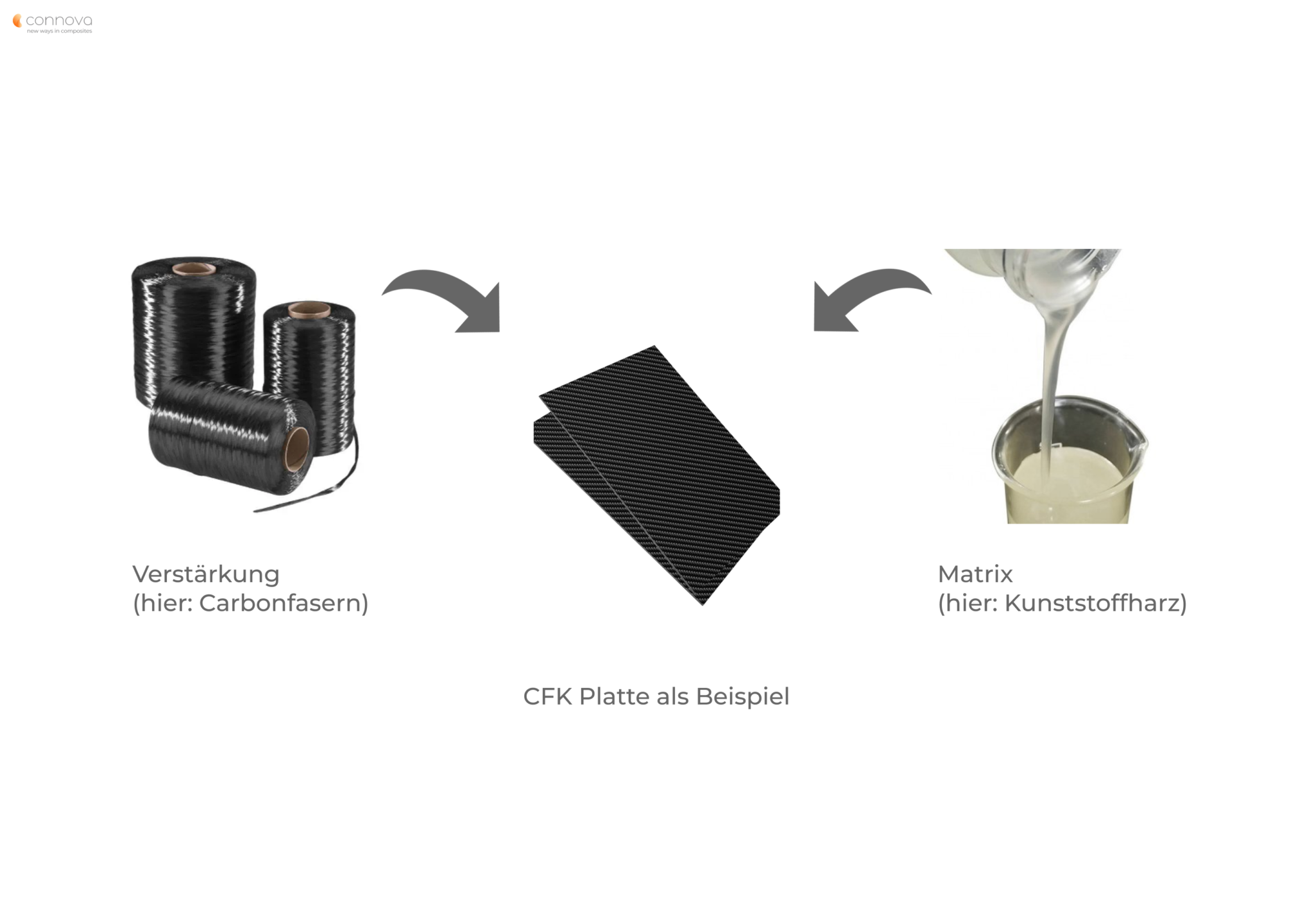
A composite material can be defined as a combination of two or more materials that together produce properties superior to those of the individual components alone. The two main components are a reinforcement and a matrix.
In practice, the reinforcing fiber (most commonly carbon fiber or glass fiber) provides mechanical strength and stiffness, while the matrix (typically a polymer resin such as epoxy, polyester, or a thermoplastic) holds the fibers in position, protects them from environmental influences, and transfers loads between them. The best-known example is CFRP (carbon fiber reinforced polymer): carbon fibers are combined with an epoxy resin to create a plate or structure that is both extremely lightweight and exceptionally strong.
This principle is not limited to high-tech applications. Reinforced concrete, for example, is one of the oldest composite materials, combining the compressive strength of concrete with the tensile strength of steel reinforcement. Modern fiber-reinforced composites simply push this concept to its engineering limits.
For a deeper insight into CFRP and its properties, visit our page on Composites and CFRP.
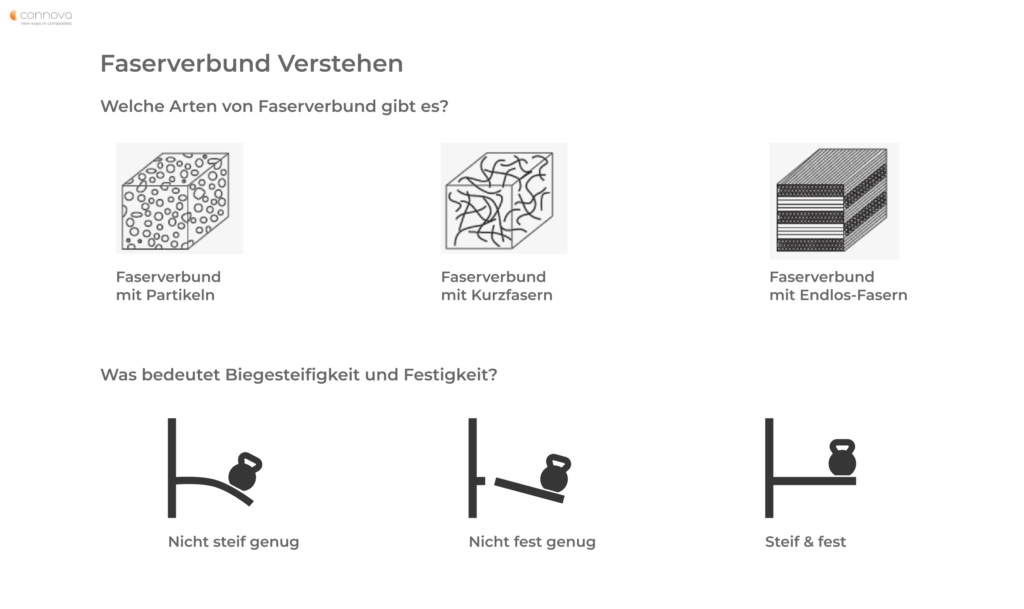
Composites can be classified according to the type of reinforcement: particle-reinforced composites, short-fiber-reinforced composites, and continuous-fiber-reinforced composites. The latter offer the highest stiffness and strength.
The difference lies in the load transfer. In particle-reinforced materials, the loads are predominantly carried by the matrix. The composite is stiffer than the pure resin, but by no means as load-bearing as a continuous-fiber-reinforced variant. Short fibers improve strength compared to particles, but their limited length means they cannot transfer forces as efficiently.
The full potential of fiber reinforcement is only realized with continuous-fiber-reinforced composites (also referred to as fiber-reinforced composites). Here, the fibers run uninterrupted over the entire length of the component and carry mechanical loads directly. The result is a material that is both stiff and strong—the first choice for structural applications in aviation, aerospace, motorsport, and beyond.
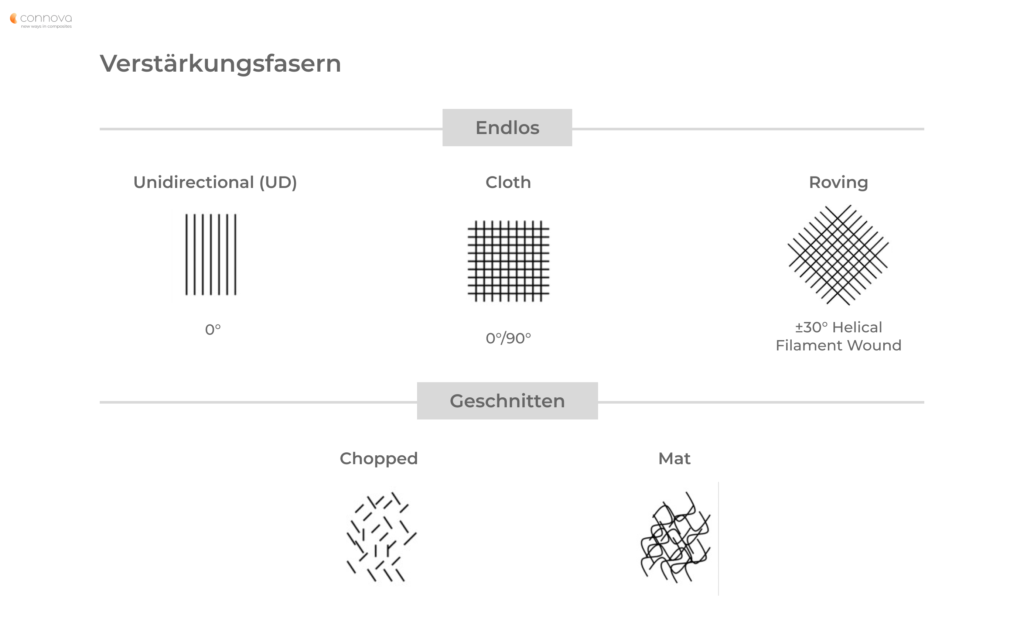
The most common reinforcing fibers are carbon, glass, aramid, and natural fibers.
Each fiber type brings specific advantages that make it suitable for different applications:
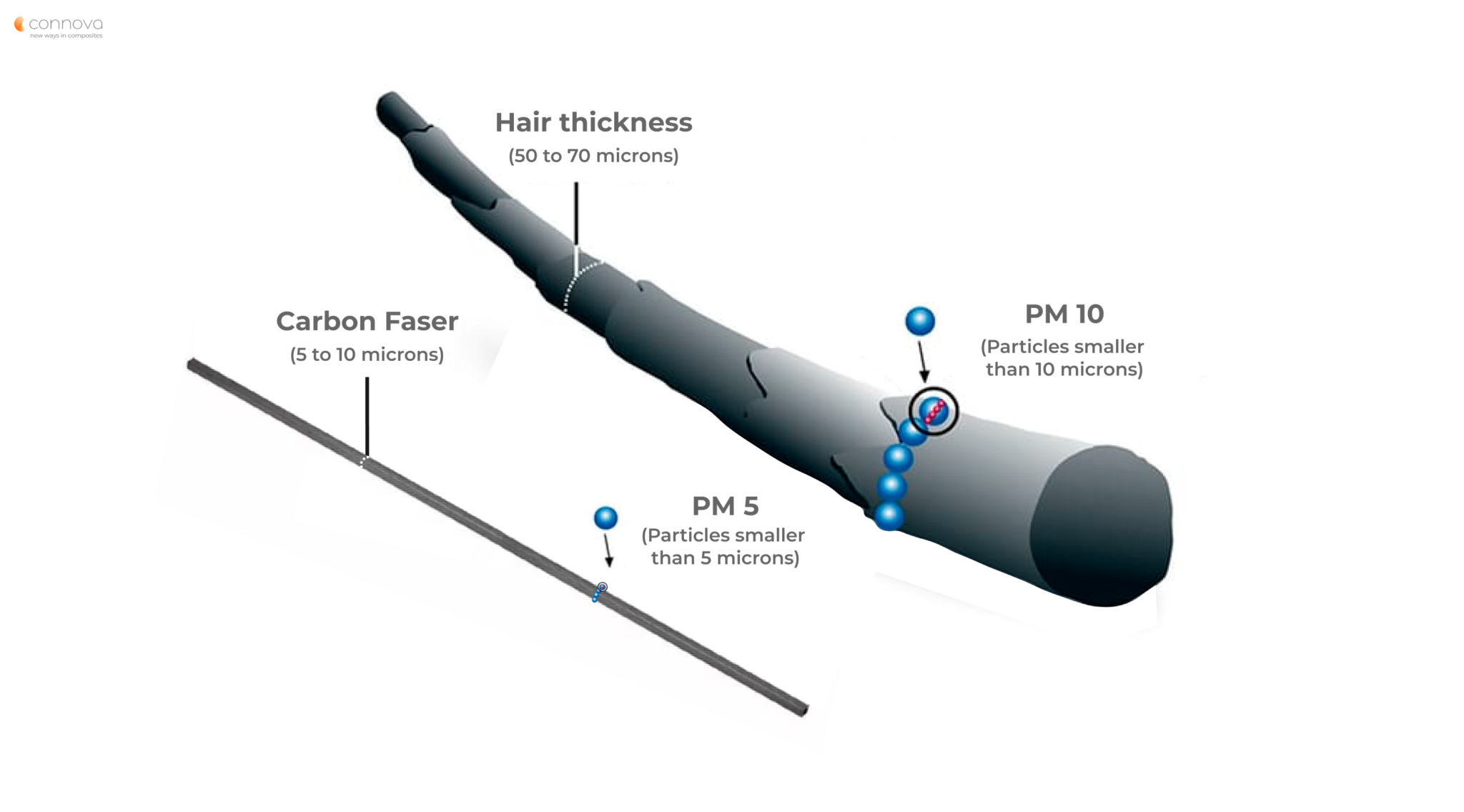
Fibers are divided into two main categories: continuous fibers and discontinuous (short) fibers. Continuous fiber forms include unidirectional (UD) fibers at 0°, woven fabrics at 0°/90°, and filament winding at oblique angles such as ±30°. Discontinuous fibers occur as chopped or mat fibers.
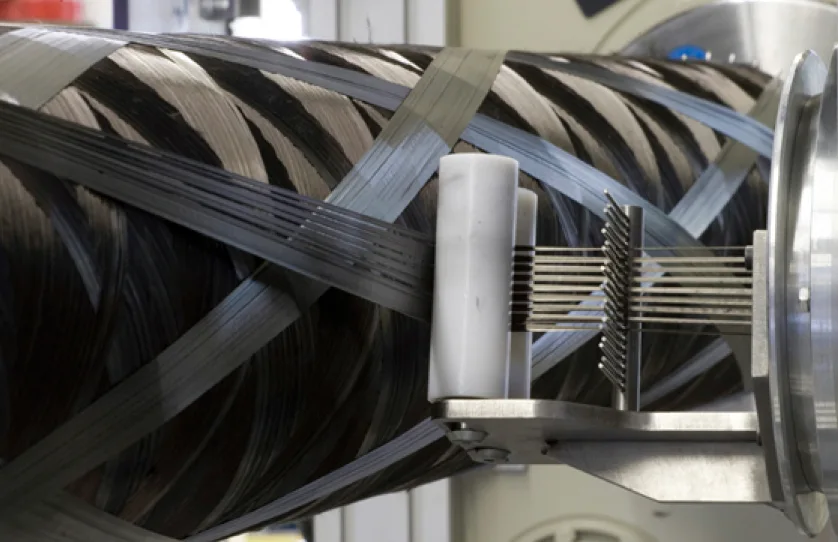
Unidirectional (UD) fibers offer the highest strength and stiffness in the fiber direction. Woven fabrics are easier to drape over complex geometries and provide strength in two directions simultaneously. Winding fibers are applied by machine to a rotating mandrel, making them particularly suitable for rotationally symmetrical components such as pipes, pressure vessels, and tanks.
The mechanical properties and costs of a composite are primarily determined by the fiber, rather than the resin. Connova operates in the field of continuous aligned fibers with high fiber volume content.
The fiber volume content (FVC) is one of the most important parameters in composite engineering. It indicates what percentage of the total volume is occupied by fibers. The higher the FVC, the higher the stiffness and strength of the composite. Typical values for high-performance composites range between 50% and 65%. The stress-strain diagram clearly shows that the fiber dominates the mechanical behavior: the matrix alone would only absorb a fraction of the stress at the same strain.
The complete picture as a PDF? Download our free technical presentation “Short Introduction to Composites” – featuring detailed diagrams, data tables, and reference material for engineers. |
Typical thermosetting resins include epoxy, vinyl ester, polyester, phenolic, and bismaleimide.
Thermosets cure through an irreversible chemical cross-linking reaction. Once cured, they can no longer be reshaped. They offer excellent mechanical performance, high temperature resistance, and outstanding chemical resistance. Epoxy resin is the most commonly used matrix in the high-performance composite sector, particularly in aerospace. The disadvantage: curing cycles can be lengthy, and the material cannot be recycled by melting.
Typical thermoplastic matrices include PP (polypropylene), PA (polyamide/nylon), PPS (polyphenylenesulfide), PC (polycarbonate), and PEEK (polyetheretherketone).
Thermoplastics can be repeatedly reshaped by heating—a significant advantage for series production, repair, and recycling. PEEK is considered a premium thermoplastic with excellent temperature and chemical resistance and is increasingly used in the aviation industry. However, processing thermoplastic composites requires higher temperatures and pressures than thermosets, which impacts tooling and equipment requirements.
For thermosetting continuous fiber composites, the most important processes are laminating (lay-up), winding, liquid resin processes (RTM), and pultrusion. Thermoplastic continuous fiber composites can be manufactured through thermoforming and compression molding processes.
The choice of process depends on the matrix type, component geometry, required mechanical properties, and production volume. For short-fiber composites (both thermosetting and thermoplastic), injection molding, compression molding, and fiber spraying are common, making them ideal for large-scale production.
Learn more about our composite solutions and competencies.
The combination of different fiber orientations leads to specific properties of laminates (a stack of individual layers).
Laminate design, often referred to as the lay-up, is at the center of composite engineering. By carefully choosing the fiber angle of each individual layer, the engineer can precisely tailor the mechanical properties of the component to the loading conditions. This is one of the greatest advantages of composites over isotropic materials such as metals, where properties are basically the same in every direction.
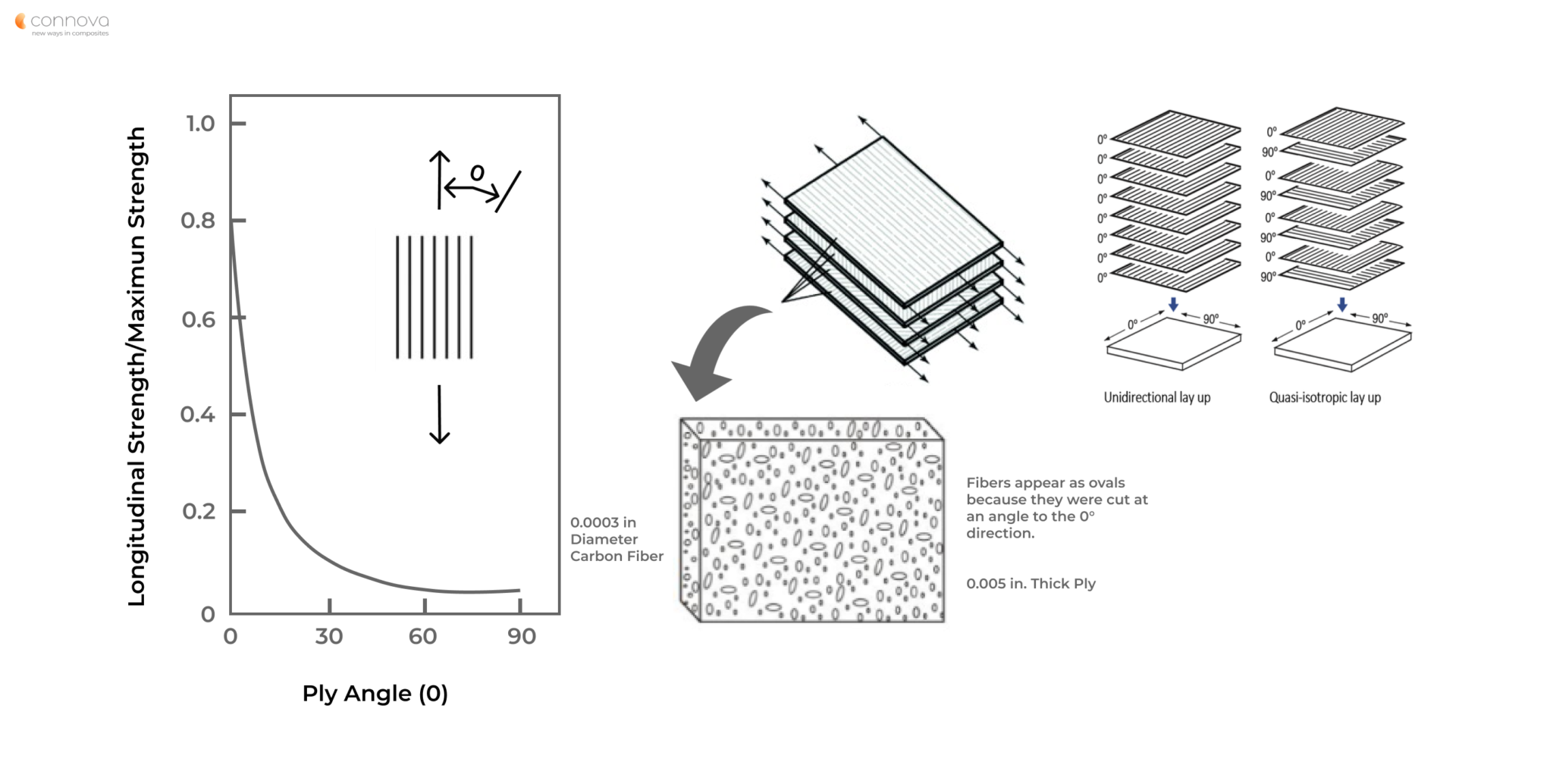
The strength of a composite depends heavily on the fiber orientation. At 0° (parallel to the load), the strength is maximal. As the angle increases, it drops rapidly. Even at 30°, it is significantly reduced, and at 90°, only the matrix strength is effective.
This directional dependence, known as anisotropy, is both the greatest strength and the most demanding property of composites. It enables tailored structures but requires a sound understanding of load paths and careful laminate analysis. An incorrect lay-up can lead to premature failure, while an optimal structure can save significant weight compared to a metallic solution.
A unidirectional (UD) lay-up (all layers at 0°) offers maximum strength in one direction. A quasi-isotropic lay-up (e.g., 0°/90°/+45°/-45°) distributes strength more evenly across all in-plane directions.
Quasi-isotropic laminates are often used when the loading direction is not clearly defined or when similar properties are needed in multiple orientations. In practice, most laminate designs are a compromise between peak performance in the primary loading direction and sufficient strength in secondary directions. Experienced composite engineers at Connova Group can support you in finding the optimal lay-up for your specific application.
Using the example of a standard HT (High Tenacity) carbon fiber, the influence of loading direction and laminate architecture becomes clear:
Single layer (ply): Under transverse loading (perpendicular to the fiber), the strength is 50 MPa and the modulus is 10 GPa. Under loading parallel to the fiber, the strength jumps to 2,100 MPa and the modulus to 140 GPa.
Laminate level: A UD laminate retains the full parallel properties of 2,100 MPa strength and 140 GPa modulus. A quasi-isotropic laminate achieves 300 MPa strength and 54 GPa modulus in all in-plane directions.
These figures illustrate the enormous range. In the fiber direction, a CFRP laminate is about 40 times stronger and 14 times stiffer than transverse to the fiber. Compared to structural steel (typical tensile strength 400 to 550 MPa, modulus approx. 210 GPa, density approx. 7.85 g/cm³), the decisive advantage becomes clear: CFRP achieves comparable or higher strength values at a fraction of the weight (density approx. 1.55 g/cm³). The specific strength (strength divided by density) of CFRP is many times higher than that of steel or aluminum. This is exactly why composites dominate in applications where every gram counts.
The most important production technologies for composites include autoclaving, winding, RTM (Resin Transfer Moulding), infusion, and hot pressing.
Each process has its own strengths and is optimized for specific component geometries, production volumes, and quality requirements. Choosing the right manufacturing method is crucial for the optimal balance between cost, performance, and production efficiency.
Key advantages: Component quality, reproducibility, design freedom.
Autoclave curing is the gold standard in aerospace manufacturing. Pre-impregnated fiber semi-finished products (prepregs) are cured in the autoclave under pressure (typically 3 to 7 bar) and temperature (120 to 180 °C). This achieves the highest fiber volume content, minimal porosity, and thus the best mechanical properties. The compromise: higher investment costs and longer cycle times.
Key advantages: Automation, low tooling costs, rotationally symmetrical components.
In filament winding, resin-impregnated continuous fibers are wound onto a rotating mandrel under computer control. This process is ideal for pipes, pressure vessels (including hydrogen storage tanks), drive shafts, and cylinders. It offers high automation and excellent repeatability.
Key advantages: Component quality, reproducibility, series capability.
In RTM, dry fiber preforms are placed in a closed mold, which is then injected with resin under pressure. RTM enables complex 3D geometries, good surface quality on both sides, and is well-suited for medium to high production volumes.
Key advantages: Large components, high fiber volume fraction, cost-efficient for smaller quantities.
In vacuum infusion, dry fiber layers in a single-sided mold are covered with a vacuum film. Atmospheric pressure drives the resin through the fibers. This process is particularly suitable for large-area components such as wind turbine rotor blades, boat hulls, and fairings. It requires lower tooling investment than RTM.
Key advantages: Component quality, flat or slightly curved components, series production.
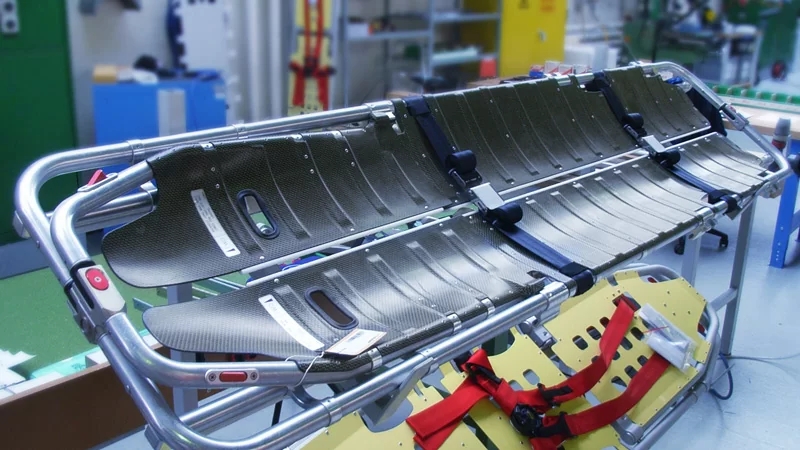
In hot pressing, prepregs or pre-impregnated semi-finished products are cured between heated tools under high pressure. This process achieves very short cycle times and is therefore ideal for the series production of flat or moderately shaped components.
Deepen Your Knowledge of Composite Manufacturing Our technical presentation contains detailed process illustrations, comparison tables, and real-world production examples from over 35 years of Connova experience. |
In aviation, the proportion of composite materials is traditionally high and can account for up to 60% of the structural weight. Composites reduce aircraft weight, improve fuel efficiency, and increase overall performance.
Connova Group has been active in the aviation industry for over 20 years, producing high-performance, load-bearing parts and structural components. From engine nacelles and cowlings to cockpit structures, drive shafts, and fittings, every component is designed with optimal weight efficiency, stability, and durability over the entire life cycle in mind.
Extremely lightweight and ultra-stiff carbon fiber composite structures are the standard for demanding aerospace missions, including launch vehicles, satellites, spacecraft, and space telescopes.
Connova Group has been active in aerospace for over 15 years. Our lightweight, high-stiffness components increase the payload capacity of launch vehicles and enable structures for particularly light satellites. A current highlight is the development and manufacture of four complete CFRP landing legs for the Themis rocket demonstrator in collaboration with Almatech and ArianeGroup – with the goal of reusable launch vehicles from 2030. We also contributed to the ESA CHEOPS mission with our composite primary structure.
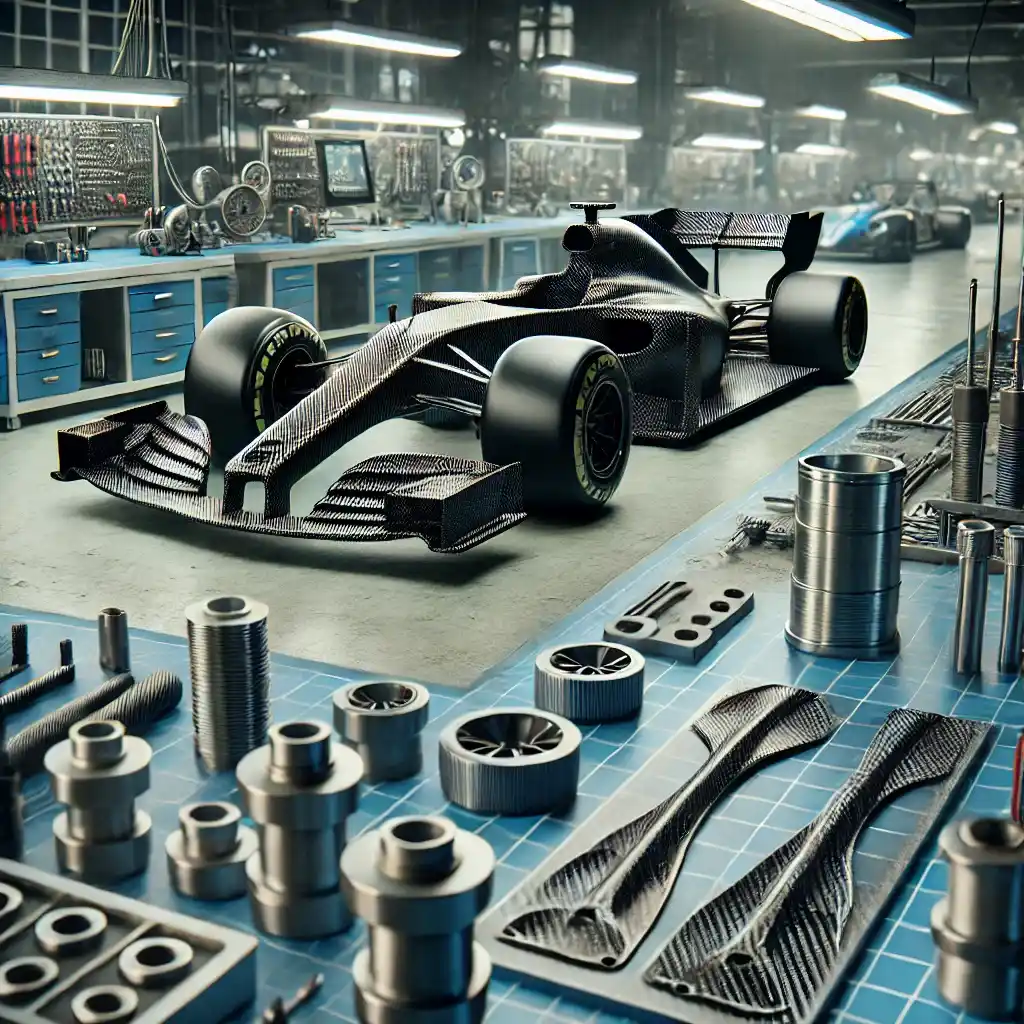
Composite structures have shaped motorsport from the very beginning. Carbon fiber components provide the combination of extreme lightness, strength, and stiffness that competitive racing demands.
Connova Group has been a partner to the Formula 1 industry for over 30 years, delivering reliable and precise ready-to-install composite components. Thanks to a high level of vertical integration (toolmaking, composites, assembly, painting), we meet even the tightest delivery deadlines. We also support the Formula Student team at ETH Zurich as a technology partner and realized the complete CFRP conversion of the Porsche 997 Turbo into the Sportec SPR1.
Composite components are becoming increasingly important in mechanical engineering, automation, and robotics. Their lower weight saves energy and increases the performance of end products – especially where maximum precision and fast movements are required.
For ABB, Connova developed and produced aramid-fiber-reinforced components for high-voltage applications. For Leica, we manufacture a thermally stable, high-precision housing. And for a pick-and-place robot in the packaging industry, we produced a CFRP boom using the RTM process. The advantages are clear: reduced accelerated masses, higher stiffness, more favorable natural frequencies, better vibration damping, and improved thermal stability.
Unmanned aircraft and drones for a wide variety of applications will shape the future of mobility. Lightweight composites optimize weight without compromising strength, enabling longer flight times and higher payload capacity.
Connova Group was selected as the main supplier for the composite airframe of the Aero2 by Dufour Aerospace and manufactures the main wing, fuselage, and engine bay assemblies. From system architecture to individual structural components, rotor blades, and fuel tanks, we offer the full spectrum of development and manufacturing services for UAVs.

Composites also play a key role in medical technology (X-ray transparent, lightweight products), the energy sector (wind rotor blades, hydrogen high-pressure storage tanks), the oil and gas industry (pipelines, vessels, tanks), the marine and yacht sector (sailboats, racing boats), and the sports and leisure sector (bicycles, boards, tennis rackets, golf clubs, fishing rods). The material properties of composites open up applications wherever lightweight construction, strength, and corrosion resistance are critical.
Composites offer a range of compelling advantages over metals and other conventional construction materials:
Beyond these core advantages, composites offer further properties that make them indispensable for modern high-performance applications:
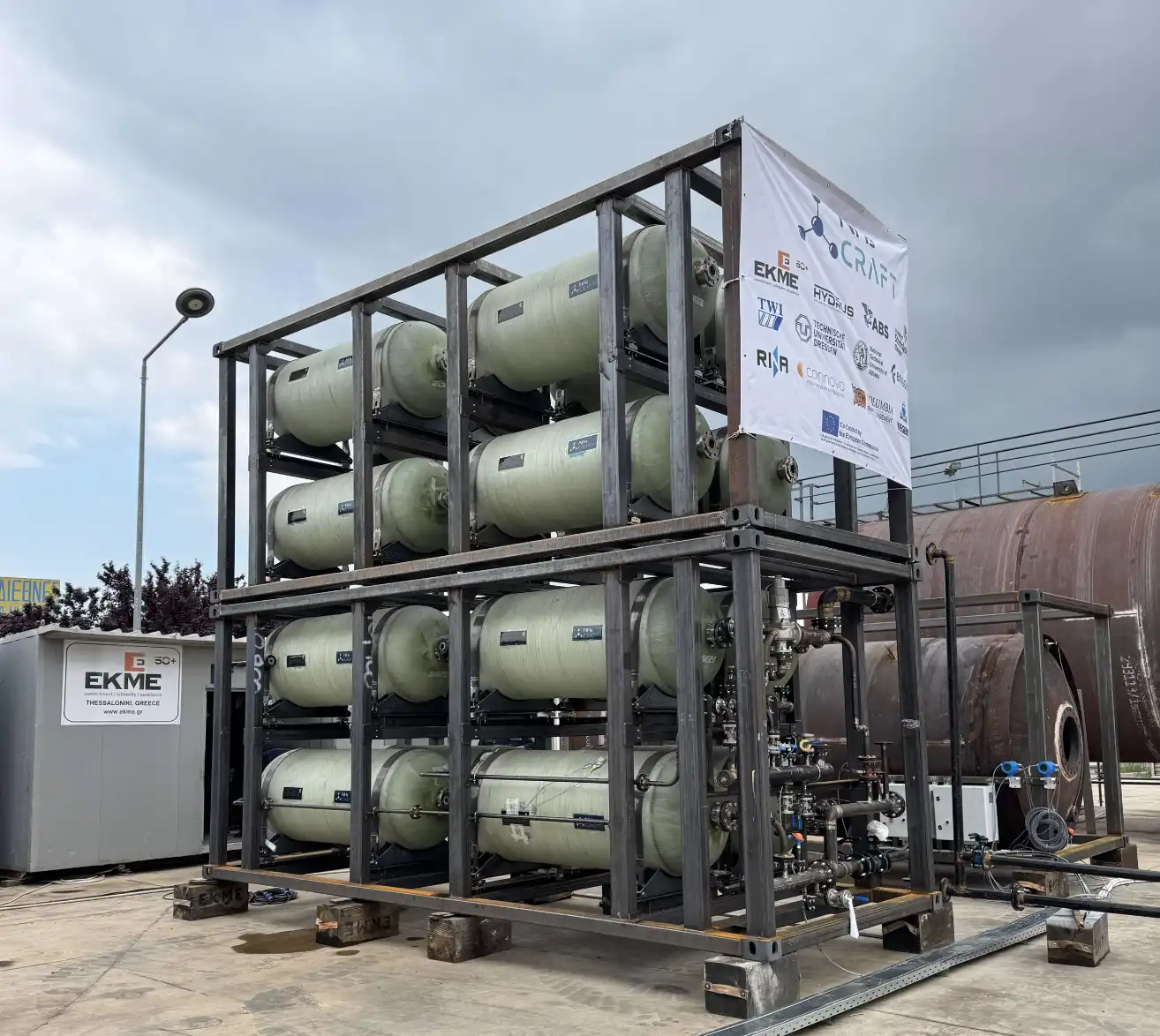
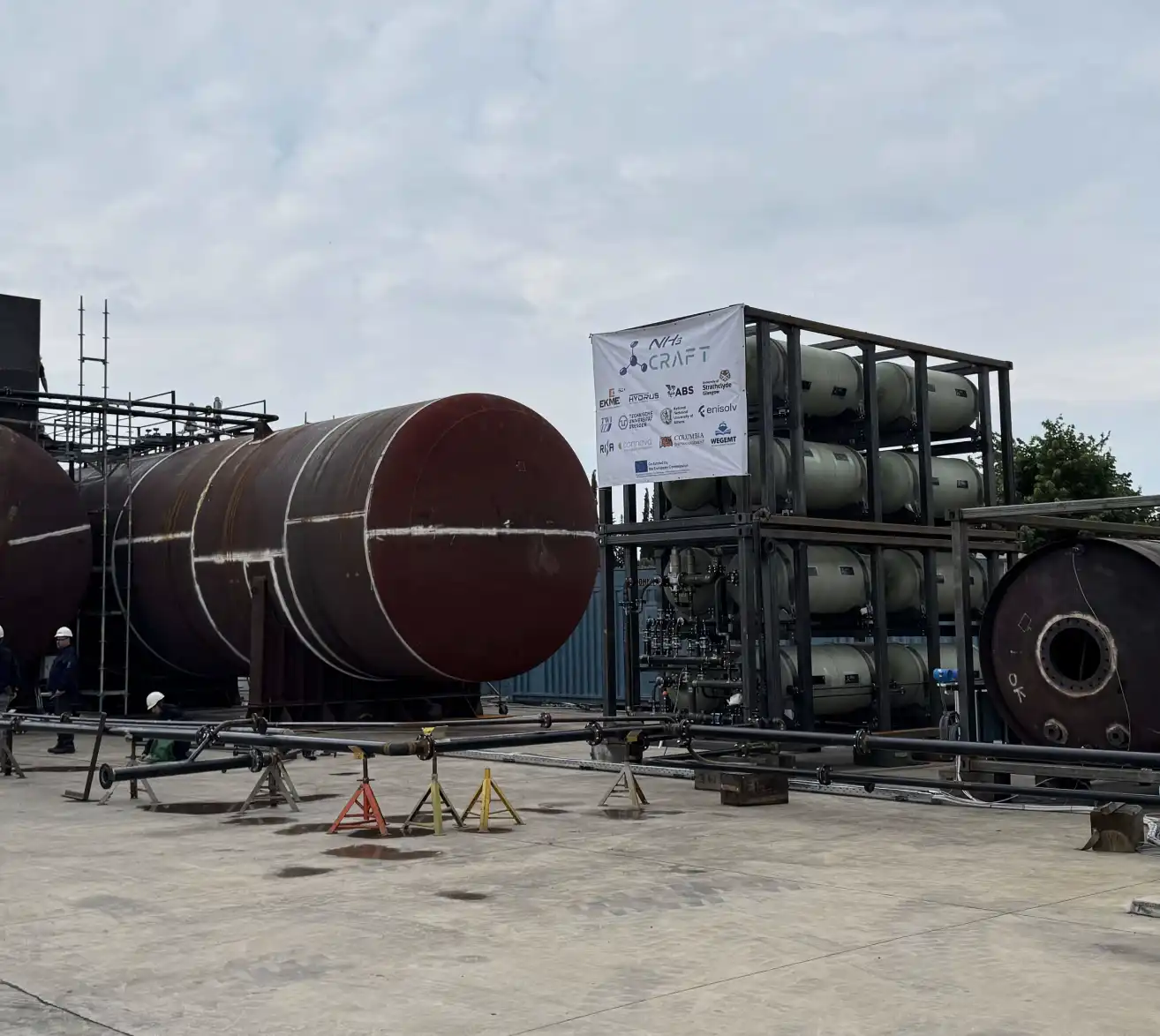
Chemically, all polymeric materials consist of hydrocarbon chains. When exposed to fire, they burn rapidly, releasing significant heat, flames, and smoke.
Synthetic fibers such as glass, carbon, and ceramic fibers are inherently flame-retardant. Natural fibers, on the other hand, are highly flammable.
There are two basic principles for achieving fire protection in composites. The first is to mix fire protection additives directly into the polymer matrix (e.g., metal hydroxides). The second is to apply a fire protection coating to the surface of the finished composite component.
Today, a wide range of fire-protected polymers and resins are available on the market – for both thermosetting and thermoplastic materials. Fire protection coatings and paints are also becoming increasingly available but tend to be more costly. Intumescent coatings (which foam up under the influence of heat and form an insulating protective layer) are the most common surface-based approach. For extreme conditions, a combination of both principles can be used.
Fire protection is particularly critical in aviation (FAR 25 requirements), rail transport (EN 45545), construction, and electronics. The choice of fire protection system influences not only fire safety but also mechanical properties, weight, and costs. Finding the right balance requires specialist knowledge and careful material selection.
UL 94 is the standard for the safety of flammability of plastic materials for parts in devices and appliances, published by Underwriters Laboratories (USA). It determines the tendency of a material to either extinguish or spread a flame after ignition. UL 94 is harmonized with IEC 60707, IEC 60695-11-10, IEC 60695-11-20, ISO 9772, and ISO 9773.
Classifications from lowest to highest flame resistance:
For demanding applications, V-0 is typically the minimum requirement. In practice, fire-protected composites are often used in combination with intumescent coatings that foam up under heat and form a protective insulating layer.
Connova Group is a leading provider of customized composite components with over 35 years of experience. We cover the entire value chain:
Whether prototype or series production, whether carbon, glass, aramid, or natural fibers – Connova Group manufactures composite components to perfection. We realize your ideas and plans through to full production readiness.
Discover our full range of composite solutions or visit our homepage to learn more.
A composite is an engineered material made of at least two components: a reinforcing fiber (such as carbon or glass fiber) and a matrix (such as epoxy resin). Together, they achieve mechanical properties that none of the components could provide alone – including higher strength, lower weight, and better environmental resistance.
CFRP (carbon fiber reinforced polymer) uses carbon fibers as reinforcement and offers the highest stiffness and strength at the lowest weight. GFRP (glass fiber reinforced polymer) uses glass fibers. GFRP is more cost-effective but heavier and less stiff. The choice depends on the application requirements for weight, performance, and budget.
Composites offer superior specific strength and stiffness (performance per unit weight), no corrosion, higher fatigue resistance, tailored properties through controlled fiber orientation, the ability to integrate multiple functions into fewer components, and excellent chemical resistance. They are also X-ray transparent, which is important for medical applications.
A quasi-isotropic laminate uses fiber layers in multiple directions (typically 0°, 90°, +45°, and -45°), so that the in-plane mechanical properties are nearly independent of direction. In contrast, a unidirectional (UD) laminate has maximum strength in only one direction but is significantly weaker perpendicular to the fibers.
The most important processes are autoclave curing (highest quality), winding technology (rotationally symmetrical components), RTM/Resin Transfer Moulding (series production), vacuum infusion (large components), and hot pressing (short cycle times). The choice depends on the component geometry, production volume, and quality requirements.
The fiber volume fraction (FVF) indicates what percentage of the total volume of a composite is occupied by fibers. A higher FVF generally means higher stiffness and strength. High-performance composites typically have FVF values between 50% and 70%. The fiber is the primary driver of both mechanical properties and material costs.
The polymer matrix is fundamentally flammable as it consists of hydrocarbon chains. However, synthetic reinforcing fibers such as carbon, glass, and ceramic are inherently flame-retardant. Through fire protection additives in the matrix or fire protection coatings on the component surface, composites can be designed to meet strict flammability standards such as UL 94 V-0.
Composites are used in aviation, aerospace, motorsport, the automotive industry (including electric vehicles), medical technology, industrial automation and robotics, the energy sector (wind turbines, hydrogen storage), the oil and gas industry, the marine and yacht sector, and the sports and leisure sector. Essentially everywhere where lightweight construction, high strength, and corrosion resistance are required.
Thermosetting matrices (e.g., epoxy) cure irreversibly through a chemical reaction and offer excellent mechanical properties and temperature resistance. Thermoplastic matrices (e.g., PEEK, PA) can be repeatedly reshaped by heating, which is advantageous for series production and recycling. The choice depends on the application, the required properties, and the manufacturing process.
Connova Group is your full-service partner from the initial feasibility study through design, development, and prototyping to certified series production. With over 35 years of experience, EN 9100/ISO 9001 certification, and a broad technology portfolio of autoclave, winding technology, RTM, infusion, and hot pressing, we turn your composite vision into reality. Contact us for a free initial consultation at connova.com.

Taylan Toprak is a graduate aerospace engineer (TU Munich, Dipl.-Ing. Mechanical Engineering with specialization in Aerospace Engineering) with more than 15 years of practical expertise in the development and manufacture of high-performance composites. His career includes leadership positions at MT Aerospace AG (where he headed the Aviation & Defence division and contributed to programs such as Airbus A350 XWB and A400M), CBG Composites GmbH (as Managing Director), and c2i Composites Innovations International (as Business Development Director for the automotive sector).
Since 2020, Taylan has headed the Sales and Project Management department at Connova Group, where he drives business development with a focus on aviation, aerospace, automotive, and new composite applications. He has contributed significantly to strategic growth initiatives, M&A activities, and technology partnerships. Taylan is a regular speaker at specialist conferences and exhibitions on composite technologies and is passionate about showing how advanced fiber-reinforced materials can solve real-world engineering challenges across industries.
Email: info@connova.com
LinkedIn: linkedin.com/in/taylan-toprak
Website: connova.com
