Reusable CFRP landing legs

Pictures: Almatech / ArianeGroup

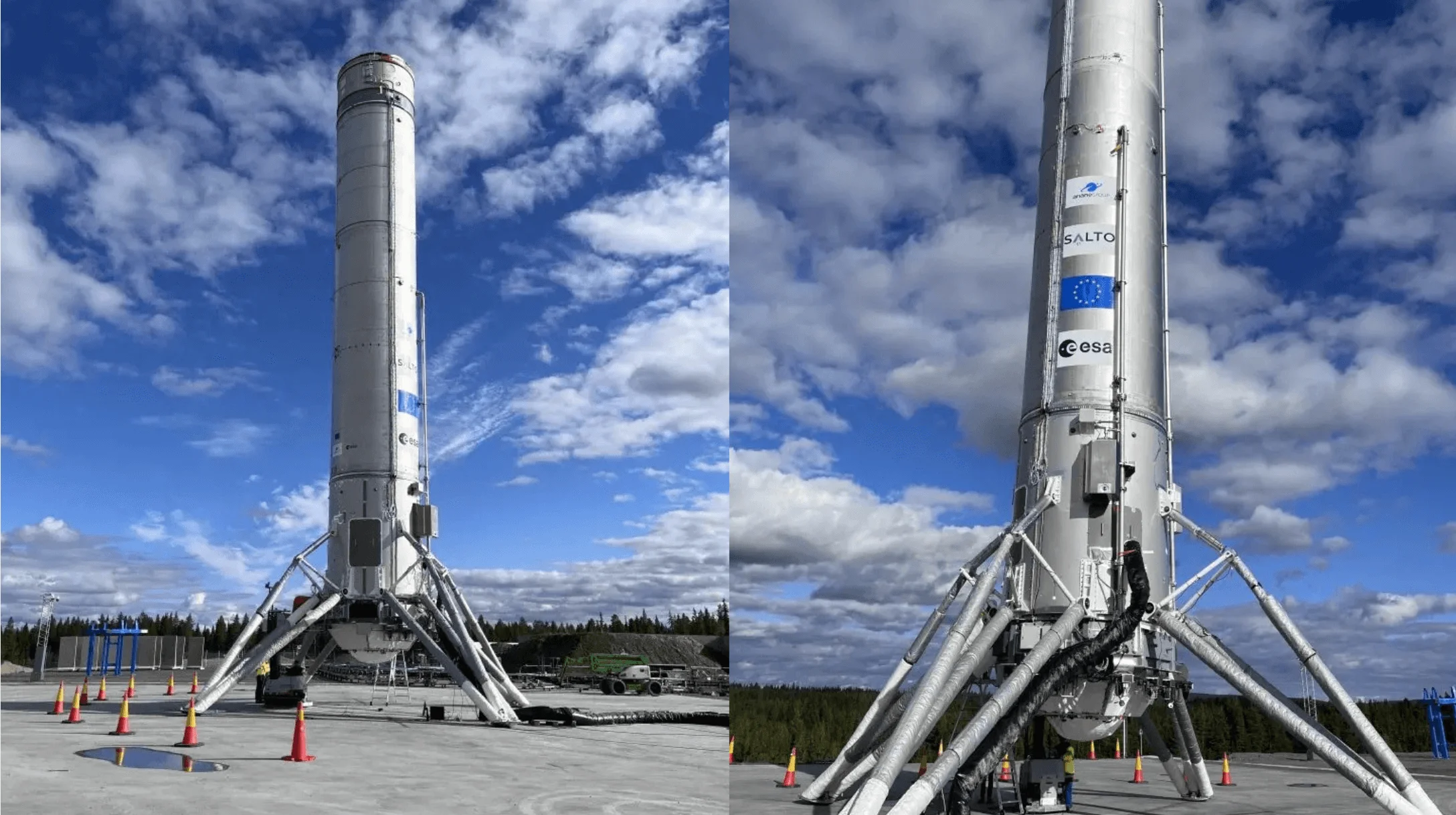
Themis on the test bench: Reusable CFRP landing legs from Connova in combined tests

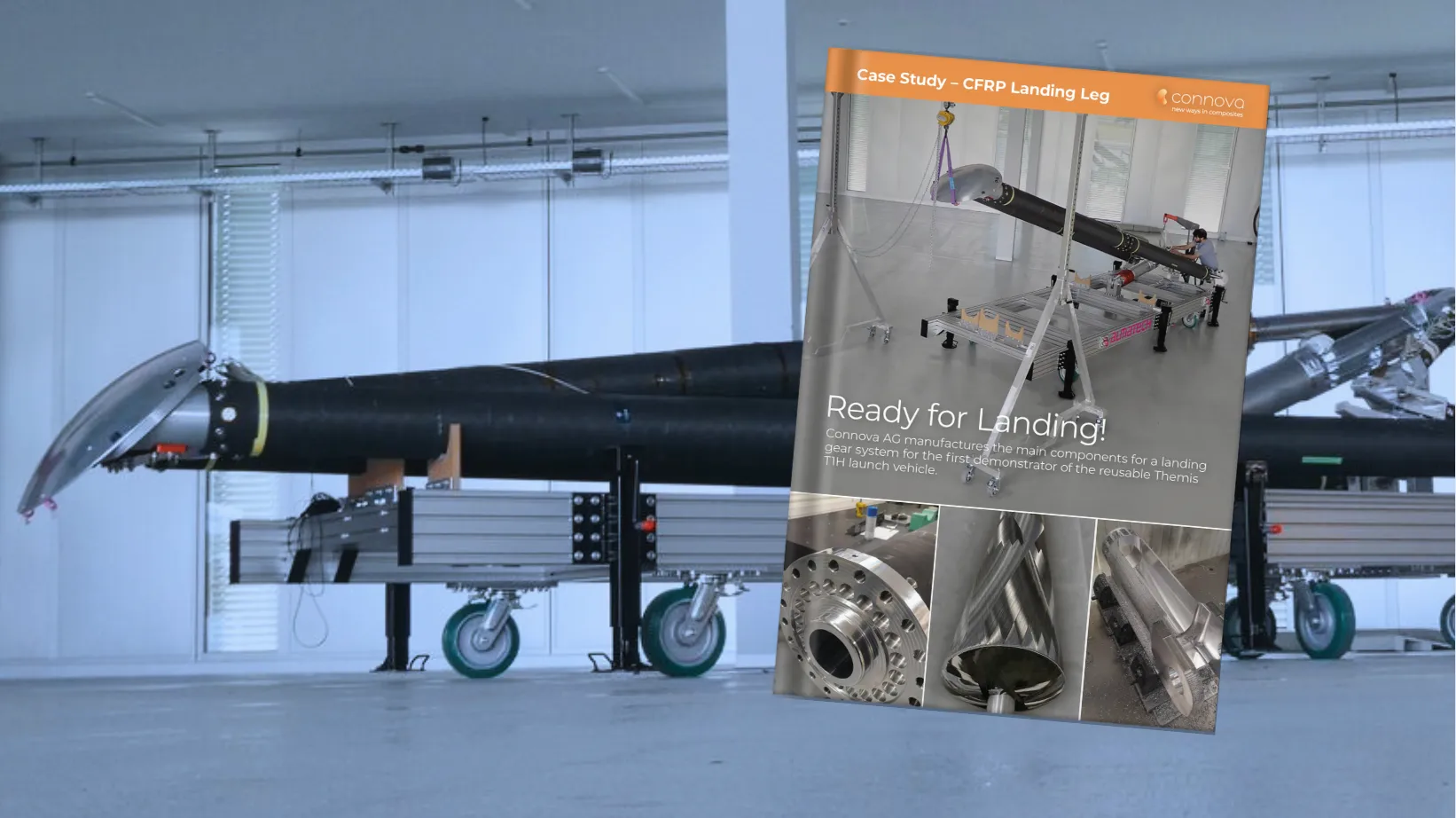
In collaboration with Almatech, Connova has developed and manufactured four CFRP landing legs for the European Themis demonstrator. The components combine high rigidity, low weight and reproducible production quality – prerequisites for reliable reusability.

Following the arrival of the prototype at the Esrange Space Center (Sweden), ArianeGroup completed the integration and positioned the stage at the launch complex. This marks the start of the combined tests: the coupling to the mechanical, electrical and fluidic systems of the launch site is comprehensively tested, including tests under cryogenic conditions. A first hop test at low altitude is then planned as part of the EU SALTO program – take-off, short flight, precise landing.

Our contribution at a glance

  • Four CFRP landing legs: Fabrication of the main mechanical components (large CFRP struts with aluminum/steel end fittings), designed for repeated load changes and precise landings. Each unit was precisely measured and ultrasonically tested, among other things.
  • End-to-end expertise: process development, tool and mold construction (incl. winding mandrels), fiber winding process for large tubes, CNC processing with match drilling of CFRP and metal, autoclave/production setup, measurement technology and QA.
  • Partnership & program-based: Subcontract from Almatech (engineering) to Connova (manufacturing); integration by Almatech, integration into the ESA project Themis with ArianeGroup. First integration in 2022, further deliveries by mid-2023; test campaign planned at the Kiruna/Esrange site.
  • Lightweight construction effect: The CFRP concept enables a weight reduction of approx. 25-30% compared to purely metallic solutions – a key lever for reusability and cost efficiency.
Themis on the test bench: Reusable CFRP landing legs from Connova in combined tests

Themis in a nutshell

Themis is a European demonstrator for a reusable main stage on the scale of a medium to heavy-duty carrier. Developed as part of an ESA program by ArianeGroup. Key figures: approx. 30 m height; Prometheus® engine with around 100 t thrust. Objective: Validation of take-off, landing and ground systems.

Why CFRP landing legs?

  • Stiffness-to-weight ratio: CFRP enables significantly less mass with the same functional reliability – in the Themis context, approx. 25-30% weight savings compared to a purely metallic solution. This creates reserves for reusability and landing dynamics.
  • Durability behavior: The structure is designed for repeated load changes and high peak loads – key requirements for repeated take-offs and precise landings of a reusable demonstrator.
    Connova-Group-Case-Study-EN-2 (…
  • Functional integration & precision: match-drilling of CFRP and metal, precise measurement and ultrasonic testing ensure tight tolerances and clean interface management in system integration.
  • Additional benefits in the program context: The CFRP concept supports lower maintenance costs and cost efficiency over several test cycles – a lever for the Themis goals around re-use.

For further information on the concept, production and tests: Download the Almatech case study – CFRP landing leg free of charge at this link.